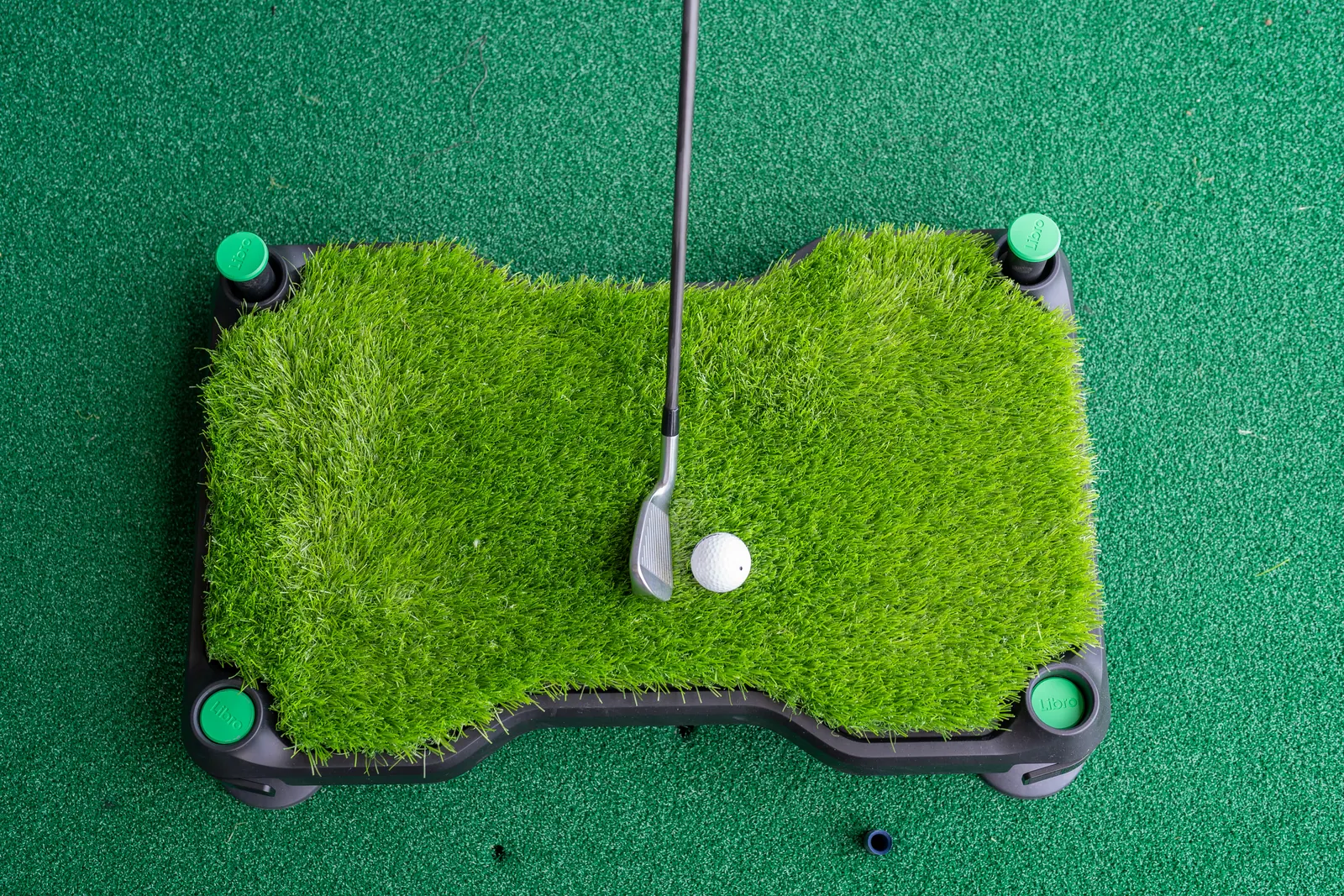
A chip from a downhill lie comes out lower than normal and runs further, because the slope takes loft off the club. To control it, use your most lofted wedge, set your shoulders with the slope, play the ball back with your weight forward, and land the ball much shorter than you would from flat ground. Then accept that some of these will finish a few feet past the hole. That is often a good result.
This is one of the shots club golfers dread around the green, and with reason. You go long on an approach, the ball runs over the back and stops on a bank that falls towards the green. The flag is cut close to your side. The putting surface runs away from you. Every instinct tells you to hit it softly, which is exactly what leads to the duff.
What the slope does
When your shoulders follow a downslope, the club moves down and along the ground through impact. That takes loft off the face. Your sand wedge starts behaving more like a pitching wedge, and your pitching wedge more like a 9-iron. The ball launches lower, carries less high and rolls out a lot further.
It also makes contact tricky. The ground behind the ball is higher than in front, so if you set up as if you were on flat ground, the club catches the turf early or bounces into the middle of the ball. The general principles for this slope are in how to hit off a downhill lie.
Which club
Use loft. A sand wedge or lob wedge gives back some of what the slope takes away. If you normally chip with a pitching wedge from flat ground, step up to a sand wedge here. If the green runs sharply away from you, a lob wedge can be worth trying, though only if you are comfortable with it.
It is the opposite of an uphill chip, where you use less loft. The two shots are mirror images, and it is worth reading chipping from an uphill lie to see them side by side.
Setting up
Shoulders with the slope
Tilt your shoulders so the lead shoulder is lower and the line across them roughly follows the ground. This moves the bottom of your stroke to where the ball is sitting, and lets the club travel along the slope through impact.
Weight forward
Most of your weight will be on your front foot. That is normal for chipping anyway, and the slope adds to it. Keep it there throughout.
Ball back
Play the ball further back than your usual chipping position, towards your back foot. On a gentle slope a little back of centre; on a steeper one, further. A practice stroke will show you where the club brushes the grass, and the ball should sit at or just behind that point.
Hands slightly ahead
Your hands will naturally sit a little ahead of the ball with this setup. Do not exaggerate it, because pushing them further forward takes even more loft off the club.

The stroke
Let the club follow the slope down. After impact, keep the clubhead low and moving down the hill. Your finish will be short and low.
Do not try to help the ball up. The urge to scoop it into the air is strong on this shot, and it is the main reason people thin downhill chips across the green. Trust the loft on your wedge.
Keep the stroke smooth and accelerating. The other big miss is decelerating because you are scared of hitting it too far. A slow, tentative stroke on a downslope catches the ground and leaves the ball on the bank. Make a shorter backswing instead and swing through with commitment.
If you thin a lot of shots from downslopes in general, why you thin it from downhill lies explains the low-point problem in more depth.
Choosing the landing spot
This is the most important decision on the shot. The ball will run a lot more than from a flat lie, so land it much shorter than feels natural.
Often the right spot is just onto the putting surface, or even on the fringe, letting the ball trickle down towards the hole. If there is a lot of green between you and the flag, you have more room. If the flag is close to your side, you may have to land the ball off the green and let it roll on.
Watch the green as well as your lie. If the putting surface also runs away from you, the ball will keep going. Allow for both slopes.
And be realistic. If the flag is cut tight on a fast green that runs away from you, getting it close may simply not be possible. Aim to leave yourself an uphill putt, even if that means finishing a bit past the hole. Trying to stop a downhill chip dead from a downslope is one of the shots that turns a bogey into a double.

Other options
On some downhill lies the chip is not the best shot. If the grass between you and the green is short and smooth, a putter can be the safest option. If the ball sits up in a bit of rough, a soft bump with a lofted club into the slope may work better than a chip. Look at what is in front of you before choosing.
Quick answers
What club should I use to chip downhill? More loft than usual. A sand or lob wedge, because the slope takes loft off.
Where should the ball be for a downhill chip? Back in your stance, towards your back foot.
Where should I land a downhill chip? Shorter than feels natural, often just onto the green, so it can run down to the hole.
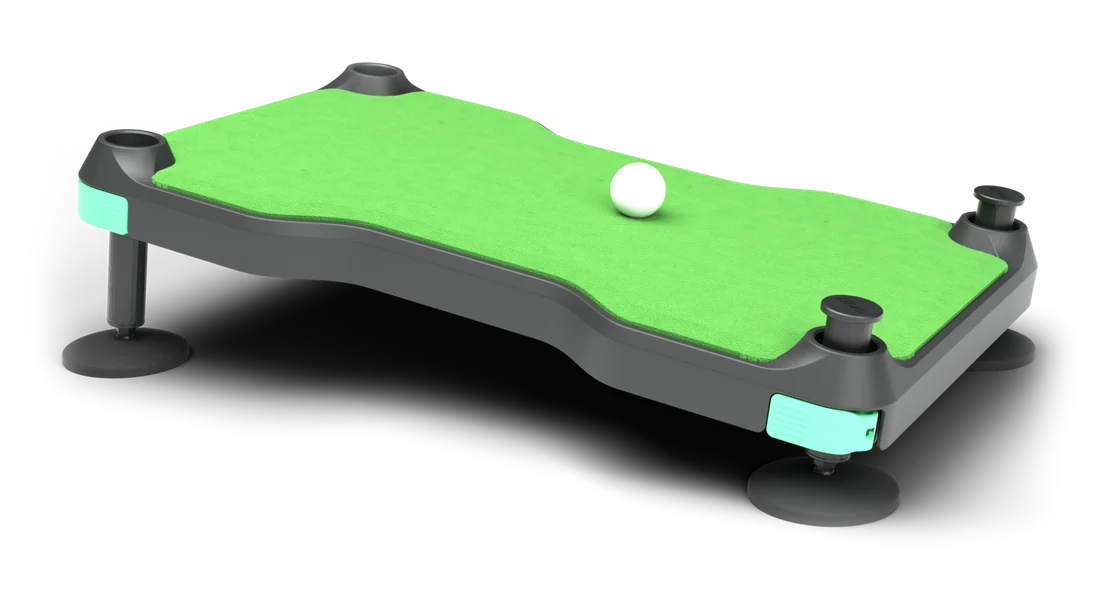
The way to get comfortable with downhill chips is to hit a lot of them, and most practice greens are flat. Libro is a portable platform that tilts up to 7 degrees along its length, with laser-engraved height lines so you can set the same downslope each time and work on your stroke from it. It is 670 by 420 mm and weighs 4.97 kg, easy to carry out to the garden. You can reserve one for £10, fully refundable.