
You thin it from a downhill lie because the ground falls away in front of the ball. If your weight hangs back, the ball is too far forward, or you lift your chest to help the ball up, the club reaches the ball after it has already bottomed out and started rising. It catches the ball's equator instead of the bottom. To stop it, move the ball back, set your shoulders roughly with the slope, keep your weight on your lead foot, and chase the club down the hill after impact.
For a right-hander, a downhill lie means your lead (left) foot is lower than your trail foot.
What actually happens at impact
With an iron, you want the club to reach its lowest point just after the ball, so it hits ball first and then turf. On a downhill lie, the turf after the ball is lower than the turf before it. So the club has further to travel down to meet the ground on the target side.
If your swing bottoms out at the same height it would on flat ground, it bottoms out above where the ground now is. The club passes through the bottom of its arc and starts to rise before it gets to the ball. The leading edge meets the ball halfway up. That's a thin.
Top it badly and the ball skids along the ground. Thin it slightly and it flies low and hot, often through the green.
The three things that cause it
Ball too far forward. This is the big one. It feels natural to put the ball up in your stance to help it into the air, especially with a lofted club. But on a downhill lie, the further forward the ball, the more the ground has dropped by the time the club gets there. Mainstream advice is the opposite: move the ball back, towards your higher (trail) foot.
Hanging back. Gravity pulls you down the hill, and your body reacts by leaning back up it. Weight ends up on the trail foot, the low point moves back, and the club is rising by the time it reaches the ball. Sometimes that same move makes the club hit the higher ground behind the ball first instead, which is why downhill lies produce fat shots as well as thin ones. Same cause, different miss.
Lifting up to help the ball. On a downhill lie the ball comes out lower than you'd like, and the temptation is to scoop it. Your chest lifts, your arms pull up, and the club rises through impact. The loft on the club is already doing that job. Let it.

How to stop thinning it
Set your shoulders roughly parallel to the slope, so your lead shoulder is lower. That tilts your swing arc to follow the ground. More of your weight will sit on your lead foot. Keep it there.
Move the ball back from where you'd play it on the flat. One ball's width on a gentle slope, more on a steep one.
Swing down the slope. After impact, the clubhead should chase the ground down the hill, staying low for longer than normal. Your finish will be lower and your weight further forward than on flat ground. Some golfers take a small step down the hill after the shot to stay balanced, which is fine.
Before you hit, take a practice swing beside the ball on the same slope and watch where the club brushes the ground. If it's catching the grass well behind where the ball would be, you're hanging back. The downhill lie pillar covers the rest of the set-up, including club choice.
Expect a different ball flight
Even struck well, a ball from a downhill lie flies lower and runs more, and tends to drift right for a right-hander. The slope takes loft off the club at impact. That's normal. Don't try to fix it by hitting up on the ball, because that's exactly what causes the thin. Take less club if you need to, play for run, and aim a touch left.
Around the green
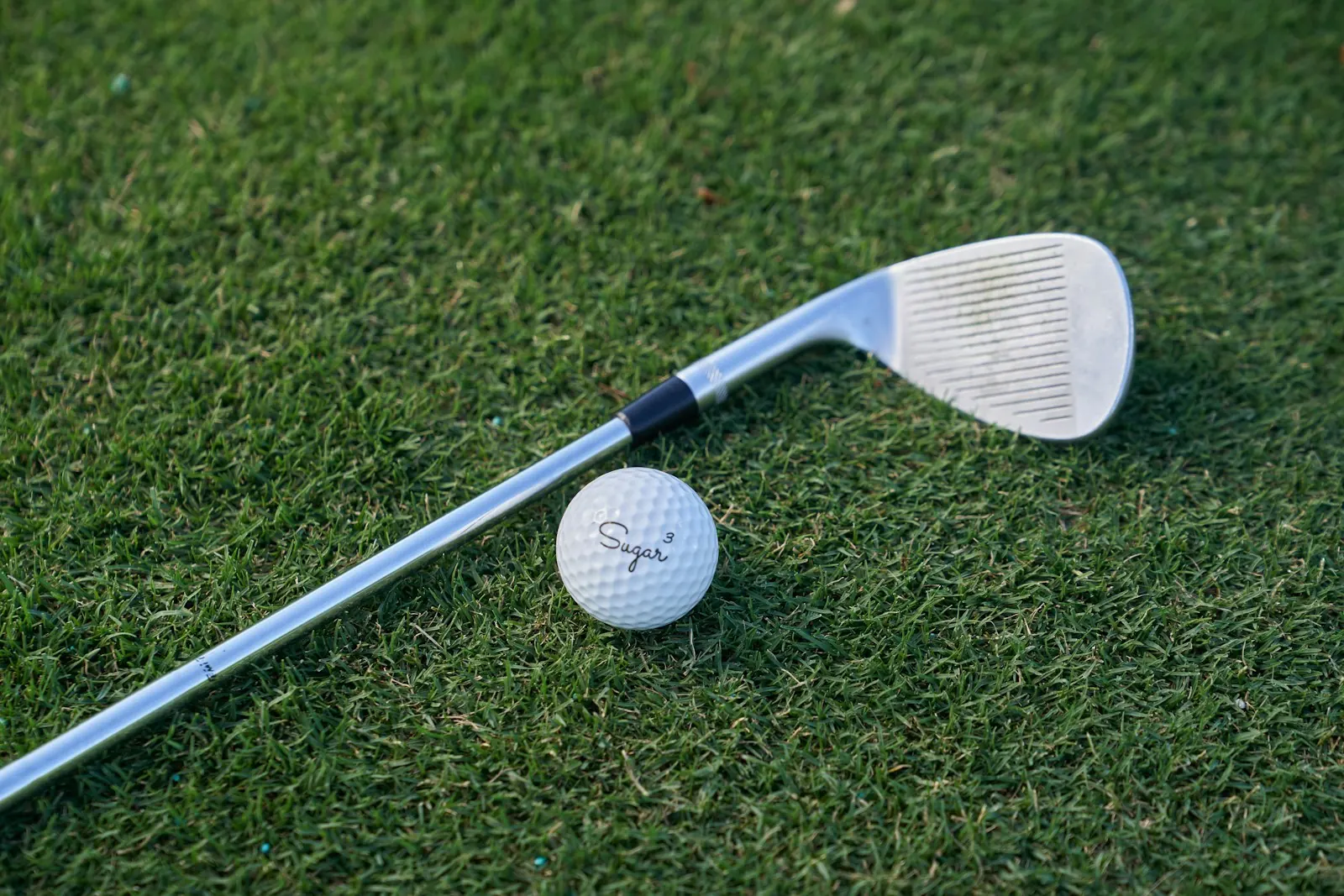
Chips from a downhill lie thin for exactly the same reasons, and with less margin for error, since a thinned chip runs a long way past. The principles are the same, with a few extra tweaks for landing spot and loft in chipping from a downhill lie.
How this links to uphill fat shots
Uphill and downhill misses are mirror images. Uphill, the ground rises in front of the ball and you hit it fat. Downhill, the ground falls away and you thin it. In both cases the cure is to set your arc with the slope instead of against it. If you get both, why you hit it fat from uphill lies is worth reading alongside this one.
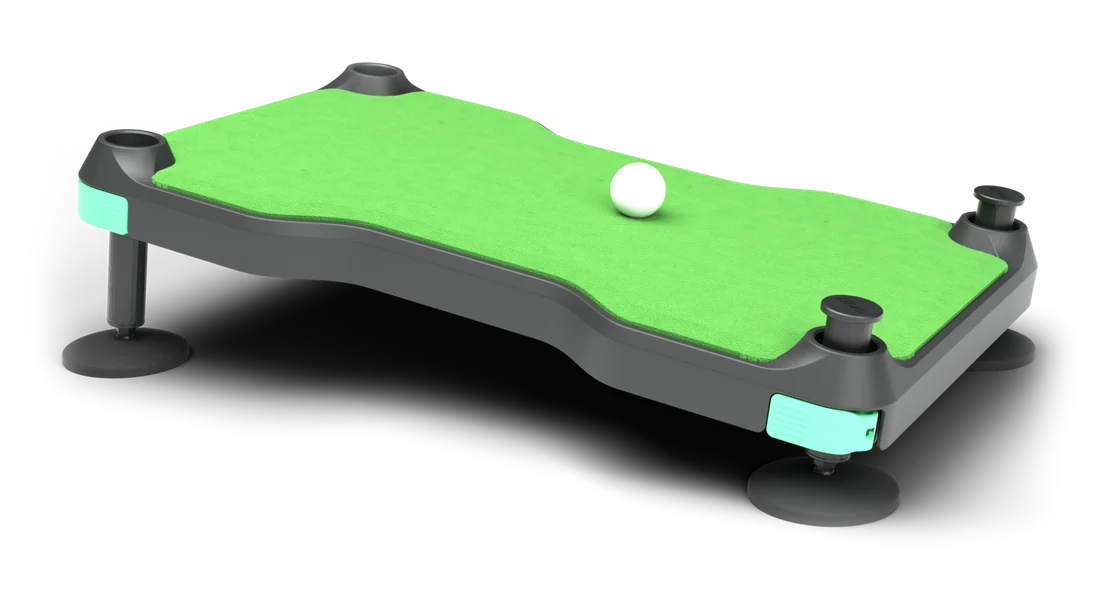
Downhill lies are the hardest lie to practise anywhere near a range, because ranges are flat. Libro is a portable platform that tilts up to 7 degrees along its length, so you can set a downhill lie, work on chasing the club down the slope, and set exactly the same lie again next session. You can reserve one for £10, fully refundable.