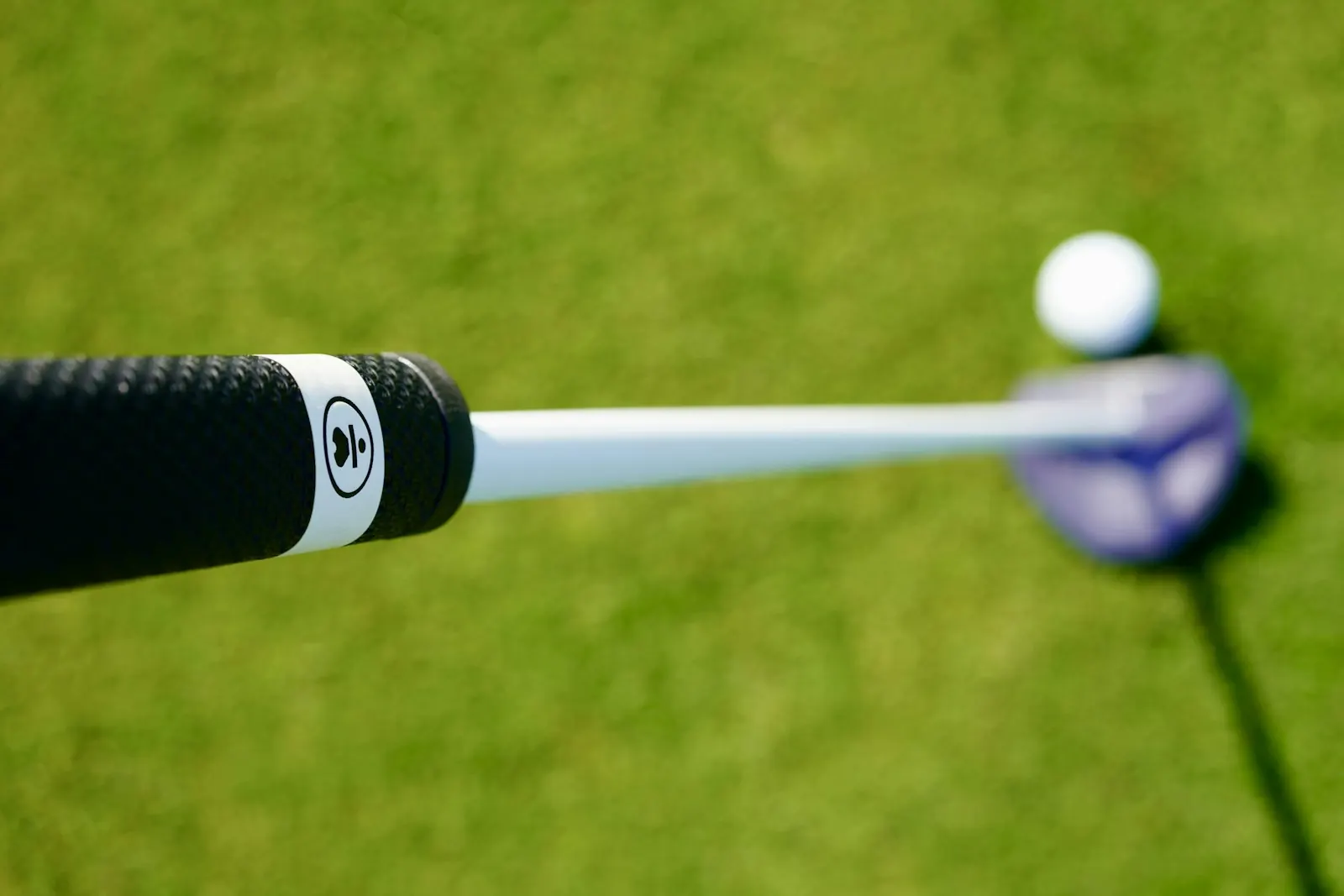
Grip down on the club when the ball is above your feet, and a little on most other sloping lies where you want control more than distance. An inch or so is a good start, more if the slope is steep. Gripping down shortens the club, brings your hands closer to the ball, and calms the swing down. You lose some distance, so take more club. The one time you shouldn't grip down is with the ball well below your feet, where you need all the length you can get.
All of this is for a right-hander, though gripping down works the same either way.
Why it works
Gripping down does three small things at once, and on a slope all of them help.
It makes the club effectively shorter, so you're less likely to catch the ground before the ball. It moves your hands closer to the clubhead, which tends to give you more control of the face. And most people swing a shortened club a bit more smoothly, which is exactly what you want when your balance is under threat.
It's also the easiest change you can make. You don't need to think about plane, weight or anything mid-swing. You just hold the club in a different place.
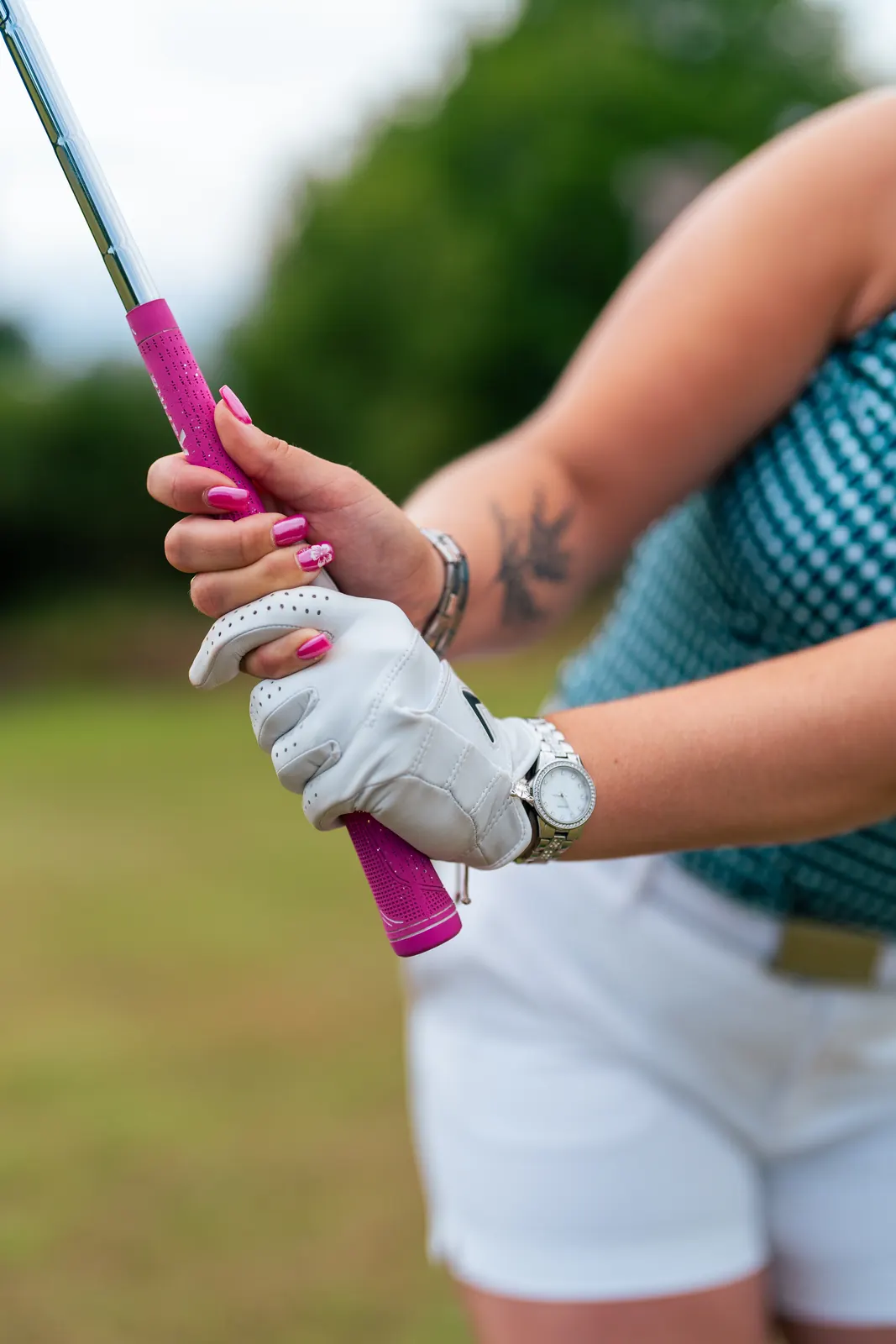
Ball above your feet: grip down, always
This is the lie gripping down was made for. The ball is closer to your hands than normal, so a full-length club would dig into the slope behind the ball or force you to stand awkwardly upright.
A simple way to judge it: the higher the ball is above your feet, the further down you go. On a gentle slope, an inch. On a steep bank, you might end up with your bottom hand on the shaft just below the grip, which is fine for a short iron.
Gripping down here doesn't stop the ball going left, since the slope tilts the face that way regardless. You still need to aim right. There's more on this lie in ball above your feet, and on how much to allow for in how far to aim off on a sloping lie.
Uphill and downhill: a little, for control
On uphill and downhill lies, gripping down is less about the ball's distance from you and more about control. Your balance is compromised and a shorter club swung at around 80 percent is much easier to strike cleanly.
An inch is usually plenty. On an uphill lie you'll often take an extra club anyway because the slope adds loft, so gripping down on a longer club gives you control without coming up short. On a downhill lie the ball comes out lower and runs, so you may not need extra club at all.
Ball below your feet: don't
Here the ball is further from your hands, so you need the full length of the club, or as near as you can. Hold it right at the end and flex your knees more to get down to it. Gripping down on this lie makes it more likely you'll thin it or catch it out of the toe. Ball below your feet has the rest of the set-up.
How much distance do you lose?
It depends on the golfer and the club, and anyone who gives you an exact figure is guessing. You lose some, because the club is shorter and you'll usually swing it a bit slower. The practical answer is to go up a club when you grip down an inch or more, and to find your own numbers in practice.
That's worth doing. Hit five balls with a 7-iron held normally, then five gripping down an inch, then five gripping down two inches, and note the carry. Now you know, instead of guessing on the course.
Quick answers
How far should you grip down on a golf club? An inch is a sensible starting point for most sloping lies. Go further only when the ball is well above your feet.
Does gripping down make you hit it straighter? It can help control and strike. It won't cancel the curve a slope puts on the ball.
Should you grip down on a downhill lie? A little, for control. You don't need much.
A last note on balance
Gripping down works best alongside a shorter, smoother swing. If you grip down and then swing as hard as you can, most of the benefit goes. The case for swinging at about 80 percent on slopes is in balance on uneven lies.
Testing how far to grip down is hard on a flat range, because the reason you're doing it is the slope. Libro is a portable platform that tilts to recreate uphill, downhill and sidehill lies, so you can work out your own grip-down distances before you need them on the course. It's coming to Kickstarter in early 2027, and you can reserve one for £10, fully refundable.