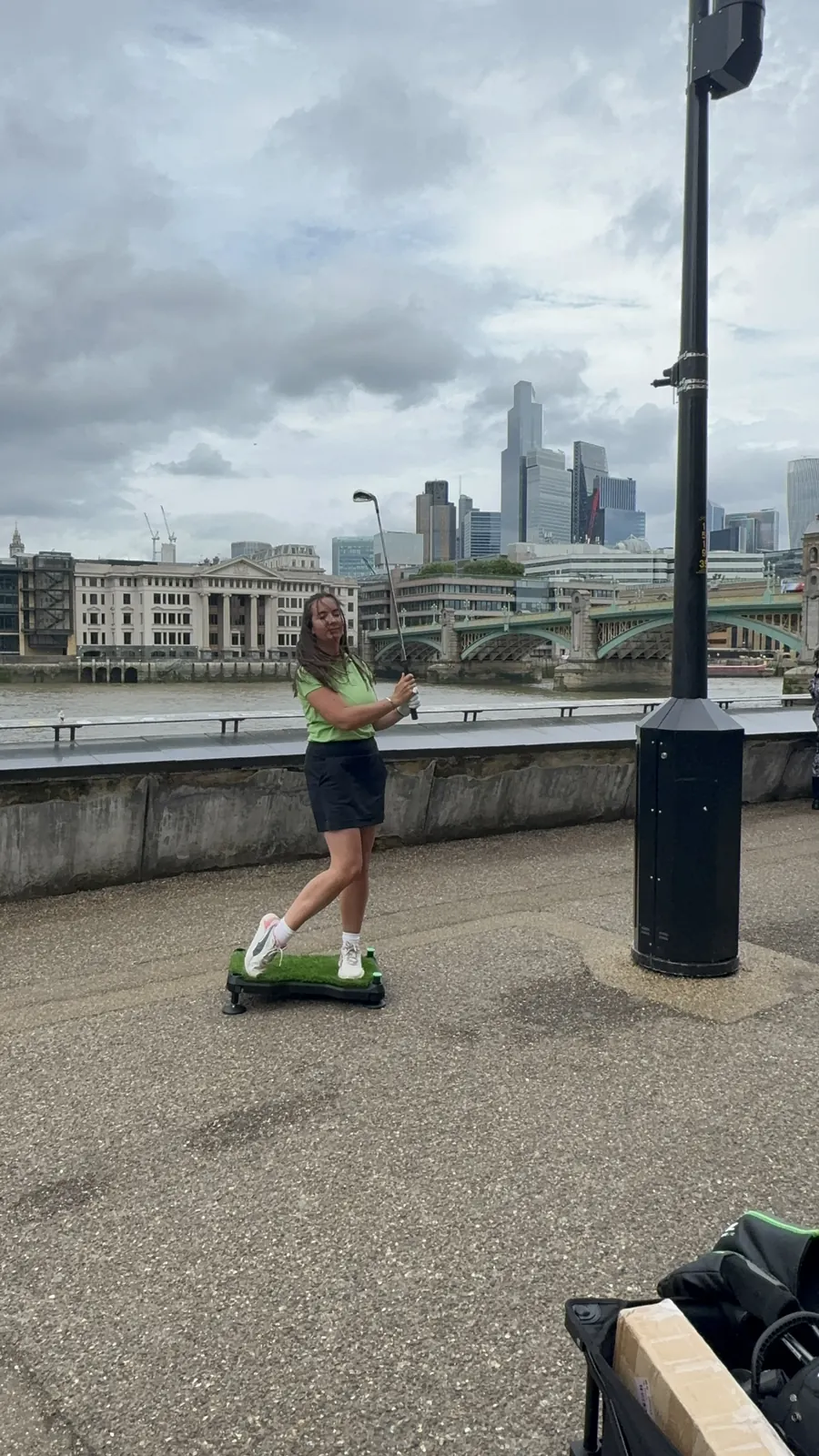
You can practise a surprising amount of golf in a small space. Putting, chipping, wedge contact, posture, balance, slow-motion swings and even sloping-lie setups all fit into a garden, a garage or the corner of an office. Full driver swings need more room than most homes have, but full driver swings are a small part of what decides your score.
The key is picking the work that suits the space, instead of trying to cram a driving range into a spare room.
First, check you can swing safely
Before anything else, take a slow full swing with the longest club you plan to use, and no ball. Watch the ceiling, the walls, the light fitting and the window. If anything is close, go down a club or shorten the swing.
Low ceilings are the common problem in garages and lofts. A wedge with a three-quarter swing needs far less room than a 7-iron at full speed. If in doubt, stick to half swings indoors.
Use foam or practice balls inside unless you have a proper net and mat set up with room behind it. Real balls bounce off frames and concrete in ways you won't enjoy. And keep pets, kids and anyone carrying a cup of tea well clear of your swing zone.
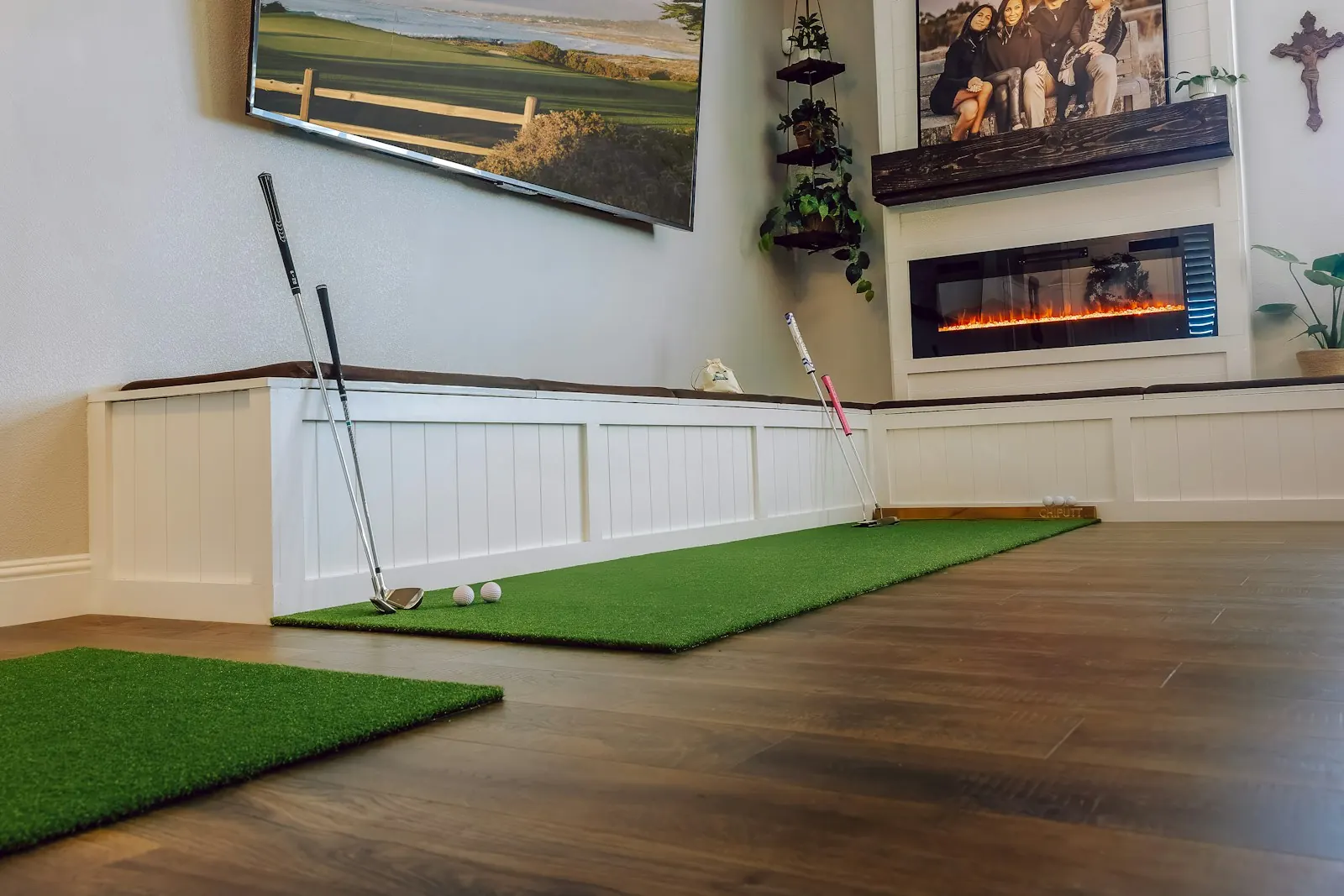
What you can practise in each space
A spare room or office (a couple of metres each way)
Putting is the obvious one. A strip of carpet or a cheap putting mat is all you need. Work on start line more than holing out. Put two tees just wider than the ball a foot in front of it and roll putts through the gate.
You can also work on:
- Setup and posture. A mirror is underrated. Check ball position, spine angle and alignment without hitting anything.
- Slow-motion swings. No ball, half speed, holding positions. Good for drilling a feel your coach gave you.
- Grip. Hold a club while you're on a call. Seriously, it helps.
A garage
If you can swing a wedge or short iron safely, a garage opens up a lot. A hitting mat and a net let you work on strike. Even without a launch monitor, you can tell a lot from the feel and the sound.
Without a net, use foam balls and focus on contact. Lay a towel a few inches behind the ball and try to miss it. Lay a second one in front and try to brush it after the ball. That teaches ball-then-ground contact, which is what matters most in iron play.
Watch out for one thing on a garage floor. A mat over concrete is harsh on your wrists if you hit fat, and it hides heavy strikes that would take a big divot on grass. Be honest about the ones that felt thick. Hitting mats vs real turf explains what the mat lets you get away with.
A small garden
A small garden is the best of the three, because you have grass and often a bit of slope.
Chipping is the big win here. Set a bucket, a towel or an umbrella upside down as a target and chip from different distances. Change the club. Change the landing spot. Use plastic or foam balls if the neighbours are close.
A garden bank, even a gentle one, lets you practise uneven lies. Most gardens have some kind of tilt near a flower bed or a fence. Stand on it, feel which way it pulls you, and make some swings. Five minutes of brushing the grass from a slope teaches you more about balance than an hour on a flat mat. If you want structure, practising uneven lies at home goes through the options.
A 15-minute small-space session
Here's one that works in a room or garden:
- Five minutes putting. Gate drill for start line, then ten putts from different lengths.
- Five minutes chipping or contact. Towel drill, different clubs.
- Five minutes of swings. Slow motion first, then a few at half pace, holding your finish. If you have a slope, do these on it.
Done most days, that adds up to a lot of golf by spring.
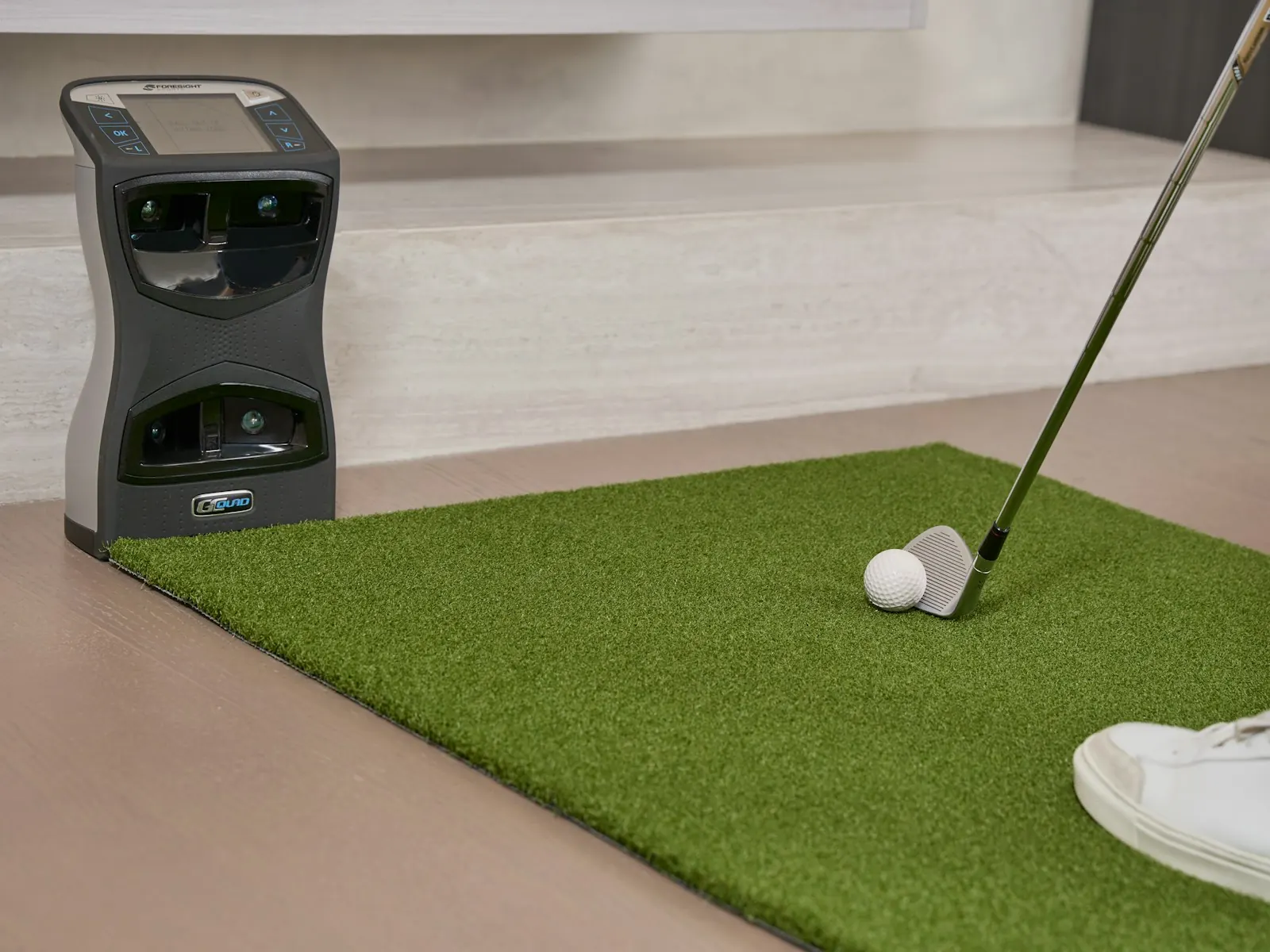
Kit that earns its place in a small space
You don't need much. In rough order of usefulness:
- A putting mat or strip of carpet.
- Foam or limited-flight practice balls.
- A mirror, or your phone propped up to film.
- Two alignment sticks, which show you where you're aiming.
- A hitting mat and a net, if you have the room.
Launch monitors are useful, but only once the basics are in place. For more on kit, the home practice equipment guide covers each category.
The limits, honestly
Small-space practice won't help much with long game distance control, and you won't see the full flight of the ball without a monitor. It's also easy to get into habits that feel fine in a garage and don't hold up outdoors, like swinging a bit short to avoid the ceiling. Get to a range or the course now and then to check.
What small spaces are good for is the boring stuff that saves shots. Contact. Putting. Setup. Balance. Most handicaps come down when those improve.
If you have no garden slope to practise on, Libro is a portable platform, 670 by 420 mm and just under 5 kg, that tilts to give you uphill, downhill and sidehill lies wherever you put it. It sets each lie in seconds with a cam lock and has nothing to charge. You can reserve one for £10, fully refundable, ahead of the Kickstarter in early 2027.