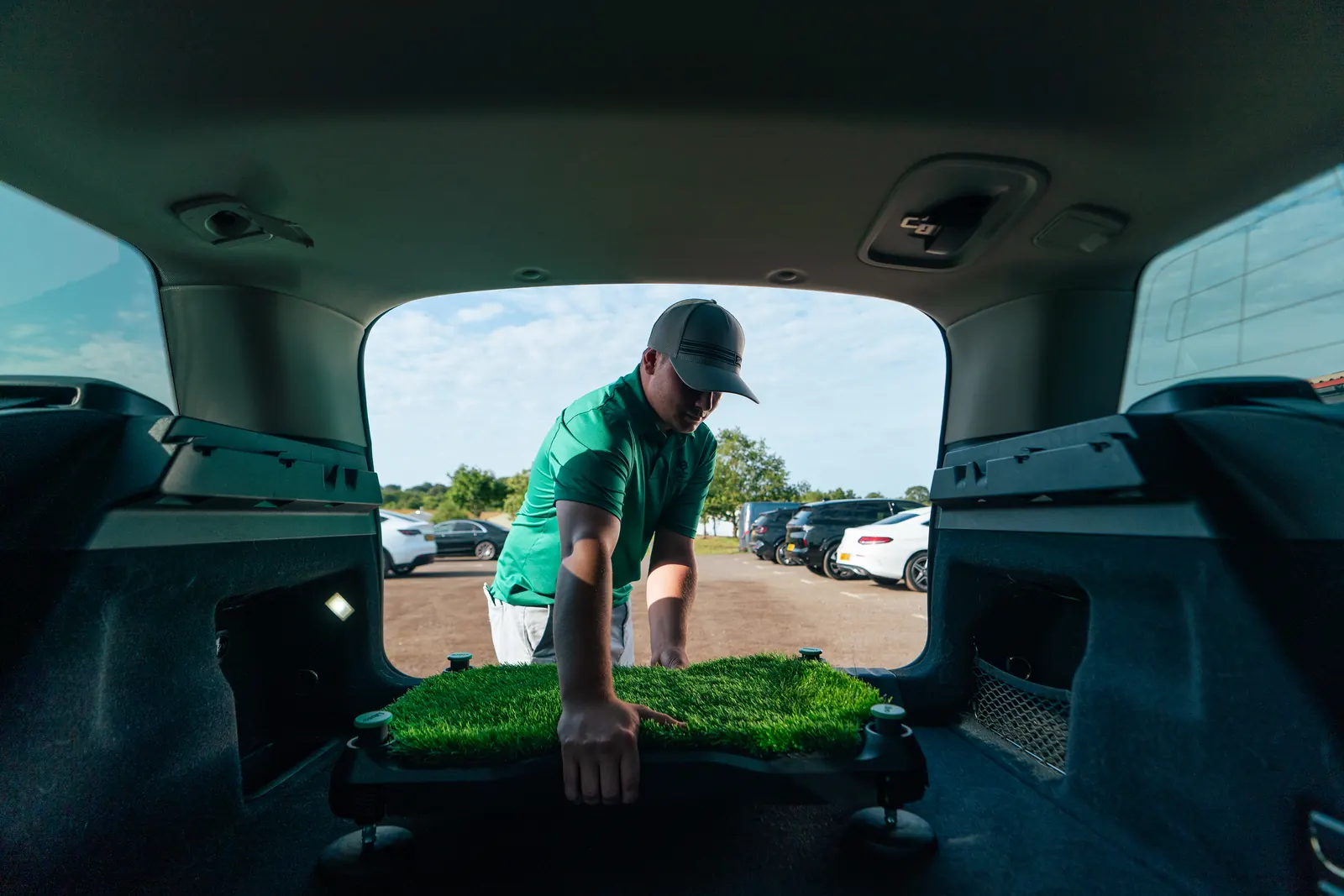
The most useful portable golf training gear is small, quick to set up and aimed at one problem. A pair of alignment sticks, a can of strike spray, an impact bag and a putting mat cover a surprising amount of ground. If you have the space, a folding net or a portable launch monitor adds full swings, and something that recreates sloping lies brings your practice closer to what the course actually hands you.
The test I use for any of it is simple. Will you take it out of the boot? A clever gadget that needs ten minutes of faff ends up in the garage. A stick you can push into the ground in five seconds gets used every session.
What each piece is actually for
| Kit | What it helps | Where it works |
|---|---|---|
| Alignment sticks | Aim, ball position, swing path | Range, garden, sim bay |
| Strike spray or face tape | Where on the face you make contact | Range, sim, garden net |
| Impact bag | Hand position and shaft lean at impact | Garden, garage |
| Putting mat or practice cup | Start line on short putts | Living room, office |
| Swing trainer | Tempo and sequence | Anywhere you can swing |
| Folding net | Full swings without a range | Garden, garage |
| Portable launch monitor | Carry, launch, curve | Range, garden, sim |
| Tilting platform | Uphill, downhill and sidehill lies | Range, garage, sim |
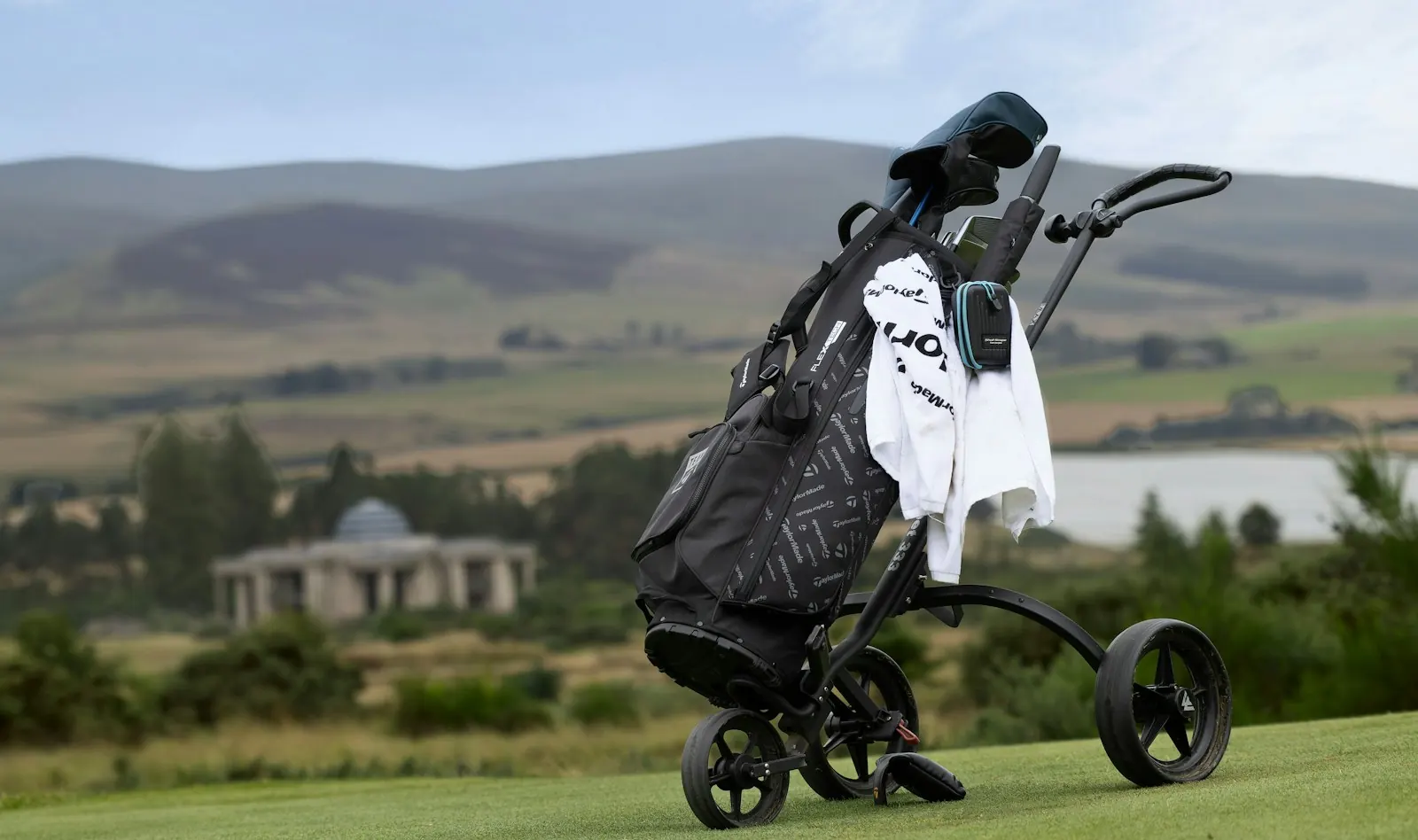
The cheap stuff earns its place first
Alignment sticks are the one thing I'd tell every club golfer to carry. Lay one along your toe line and one pointing at the ball and you find out quickly that your idea of "square" drifts. Plenty of golfers aim right without knowing it. Stick one in the ground a few feet ahead on your start line and you have a path gate for the price of a sleeve of balls.
Strike spray is the most honest coach you'll ever own. Spray the face, hit five shots, look. If the marks are all out of the heel, no amount of watching your swing on your phone will tell you as much. It also matters more than people think on mats, because a mat forgives a heavy strike that turf wouldn't (more on that in hitting mats vs real turf).
An impact bag looks daft and works. You swing into it at half pace and hold the position, and it shows you straight away if your hands are behind the clubhead at impact. Good for flippers. Not much use for anything else, which is fine.
Putting is where portable gear pays back fastest
A putting mat on the living room carpet will not teach you to read greens. It will groove your start line on putts inside six feet, and those are the ones club golfers miss and then dwell on for three holes. Put a coin down as a target instead of the cup now and then, since a smaller target makes the hole look bigger later.
Swing trainers
Weighted and whippy trainers both have fans. A heavier trainer tends to slow you down and make you feel the club's weight in the backswing. A flexible one punishes a quick, jerky transition because it lags and bounces. Neither replaces hitting balls. They're best for a few minutes before a round or in a room where hitting anything is off the table.
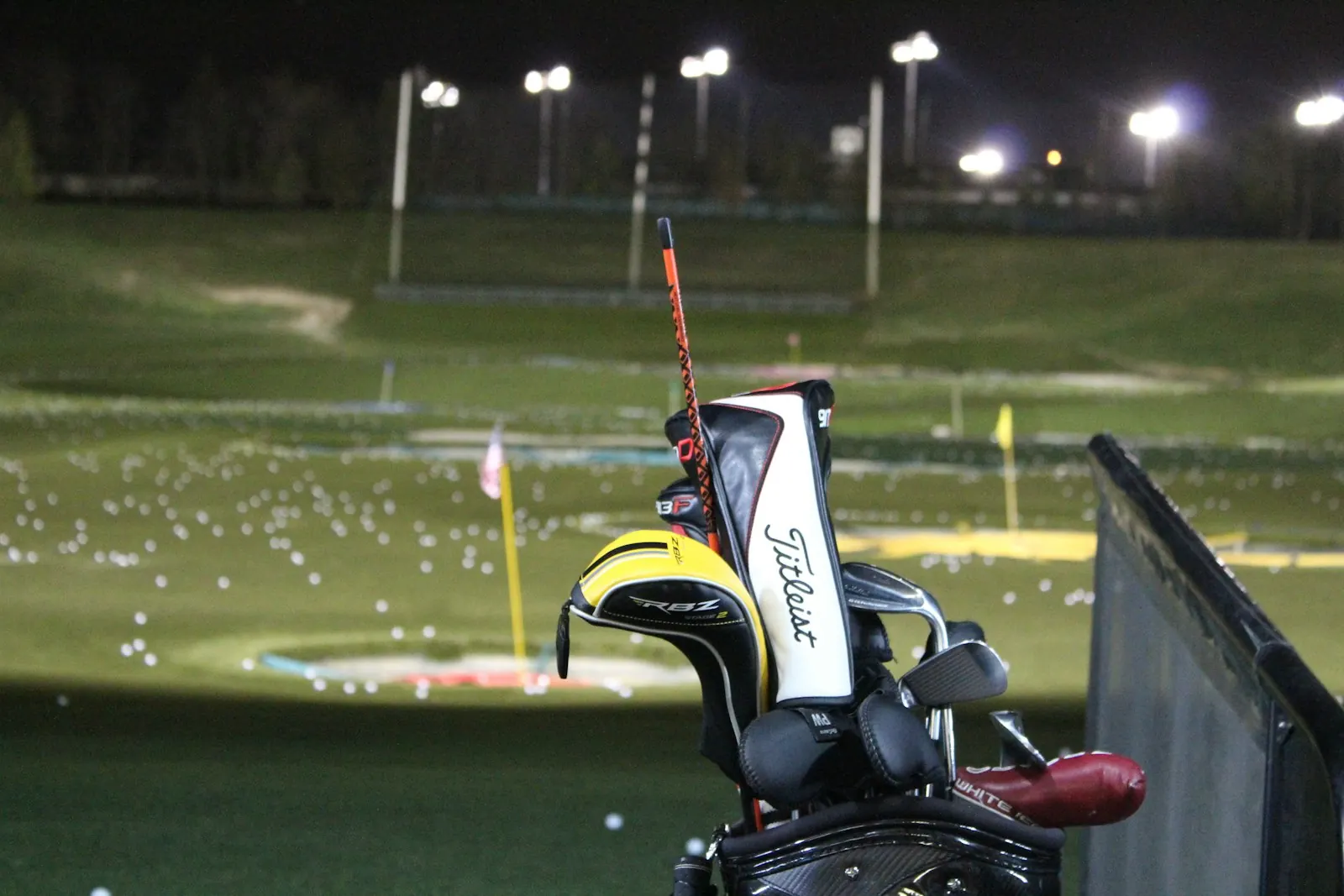
Nets, mats and launch monitors
This is where portable starts to mean "fits in the car" more than "fits in your pocket". A folding net lets you make full swings in the garden, but the mat you hit off matters as much as the net. A thin mat on a patio will jar your wrists and lie to you about strike.
A portable launch monitor changes what a garden session is worth, because you can see carry, launch and start direction instead of guessing from a ball hitting a net two metres away. If you're new to the numbers, start with the handful in launch monitor numbers that matter for beginners and ignore the rest for a while.
The gap most portable kit leaves
Almost everything above assumes a flat lie. The range is flat, the garden mat is flat, the sim bay is flat. Then you play a course where half your second shots are off a slope and wonder why the strike you had on the range has gone. If that's your problem, you need something that changes the ground under your feet. There's a run-through of the options, from a sloping bit of lawn to purpose-built platforms, in how to practise uneven lies at home.
What to leave at home
Anything that fixes a fault you don't have. Gadgets that need an app to tell you something a stick would show you. Anything so heavy you'll leave it in the house "just this once". A good portable kit is three or four items you'd miss if they were gone.
If you're building one from scratch, start with sticks, spray and a putting mat. Add the bigger pieces when you know which part of your game they're for.
Libro is a portable platform that tilts to recreate uphill, downhill and sidehill lies, up to 7 degrees along its length and 13 degrees across. It weighs 4.97 kg, needs no batteries or charging, and works with any launch monitor or simulator, or on its own. It's coming to Kickstarter in early 2027, and you can reserve one for £10, fully refundable.