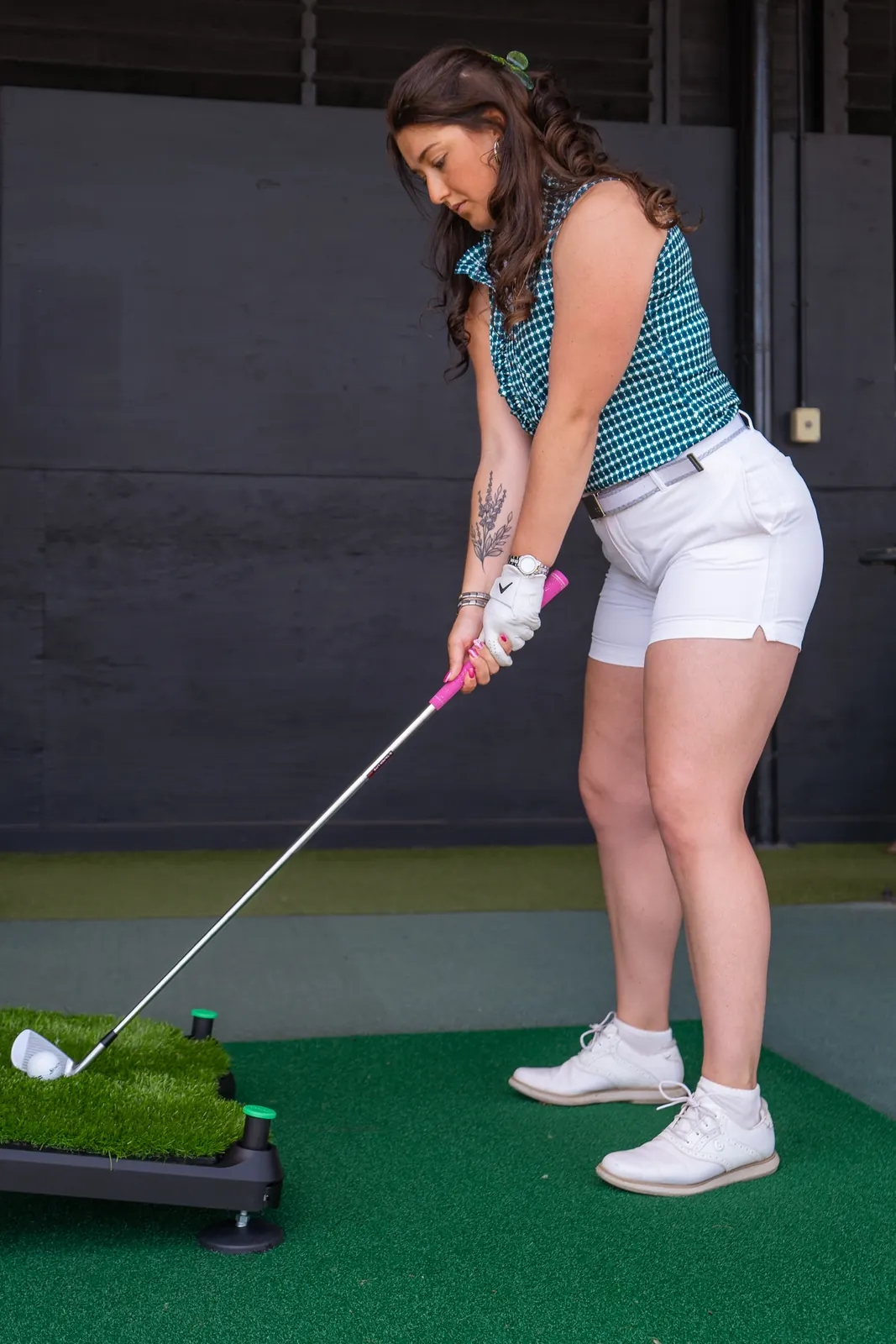
When you choose a golf net for the garden, look at four things first: size, frame strength, the quality of the netting, and how well it anchors down. A net should be big enough to catch your mishits as well as your good shots, and sturdy enough to stay put in a British breeze. After that, think about side barriers, how easy it is to put up and take down, and where in the garden it'll actually go. Get those right and a garden net is one of the most useful bits of golf kit you can own.
Size: think about your bad shots
Everyone buys a net for the shot they hit when it goes well. You need one for the shank, the toe-hook and the top that skids along the ground.
A bigger net is more forgiving of mishits, especially with longer clubs. If you're a beginner or high handicapper, go bigger than you think. If space limits you, add side barriers or stand further into the middle of the net's catch area.
Height matters too. A thin wedge or a high driver can clear a short net. Check what the maker says about which clubs the net is designed for.

Frame
Frames are usually steel or fibreglass poles, or a pop-up design.
- Heavier frames tend to be steadier in wind and take more punishment, but they're more work to put up and store.
- Lighter or pop-up frames go up quickly and pack away small, which matters if the net can't stay out all the time. They can move more in wind.
Look at how the joints connect, because that's often where cheaper frames give way over time.
The netting
This is what stops the ball. Things to check:
- Strength. The netting should be rated for golf balls at full speed. Some nets are only sold for foam or practice balls.
- Layers. Some nets have a backstop layer behind the main netting. That adds safety if the front layer wears.
- Tension. A net that's too tight can send the ball back at you. A bit of give soaks up the impact.
- Wear. UV and rain break netting down. Check it for holes regularly, especially in the middle where most balls land.
Anchoring
UK wind is the enemy of garden nets. A net that's fine on a calm day can take off in a gust. Use the stakes or weights it comes with, and add more if your garden is exposed. If you can't anchor it properly, take it down when the wind picks up, or when you're not using it.
Side barriers and targets
Side netting catches the shots that clip the edges of the main net. They're especially useful if the net is near a fence, a shed or the house.
A target sheet in the middle gives you something to aim at. It won't tell you much about where the ball would go, but it helps you focus.

Where to put it
Pick a spot with:
- Clear space behind the net. Don't put it right against a fence or wall. A ball pushing the net into a hard surface can bounce back.
- Room to swing. Swing your driver in the spot first. Check trees, washing lines and the gutter.
- Distance from the net. Follow the maker's guidance on how far to stand from it. Too close and you risk the ball rebounding at you.
- Away from windows, cars and people. Think about where a shank would go.
- Flat, firm ground under the mat. Unless you're deliberately practising a slope.
Think about the neighbours too. The noise of a ball hitting a net isn't loud, but 200 of them on a Sunday morning might be noticed.
The mat matters
What you hit from is as important as what you hit into. Hitting off the lawn will damage it quickly. A good hitting mat protects your garden and your joints. Our guide to choosing a golf hitting mat covers what to look for.
Practice balls or real balls?
Real balls give you real feedback, but they carry the most risk if the net or setup fails. Foam or limited-flight balls are safer if you're close to the house or still learning your setup. Plenty of golfers use both: foam for early sessions, real balls once they trust the net.
Using the garden slope
If your garden has a bank, a net set up at the bottom of it can give you real sloping lies, which is something no flat range can. Just check the net still catches mishits from the new angle, as shots from slopes tend to start in different directions. For a right-hander, the ball tends to go left when it's above your feet and right when it's below. There's more on making slopes at home in DIY ways to practise sloping lies, and a wider guide to kit in golf practice equipment for home.
Quick answers
What size golf net do I need? As big as your space allows. Bigger nets catch more mishits.
Can I leave a golf net up all year? Some are made for it, but UV and wind wear netting faster. Take it down in storms.
Is a garden golf net safe? If it's well made, well anchored and in the right spot, yes. Check it often.
Libro is a portable platform, 670 x 420 mm and 4.97 kg, that tilts to give you uphill, downhill and sidehill lies in seconds. It works on its own in front of a garden net, or with any launch monitor, and has nothing to charge. If your garden is flat, it's a way to add the slopes your course has. Reserve one for £10 ahead of Kickstarter in early 2027.