Most golfers score better on a simulator than on a real course, and the main reasons are simple. Every shot on a sim is hit from a perfect flat lie on a mat that forgives heavy contact, the putting is usually easier, and there's no real wind, wet ground or long walk between shots. None of that means the sim is lying about your swing. It just means it's measuring a cleaner version of golf than the one you play on a Saturday.
If you've just shot 79 on a famous course in a sim bay and then gone round your local in 91, here's where those shots went.
Every lie is flat
This is the big one. On a sim, the ball sits on the same flat mat for your drive, your 8-iron approach and your pitch. On a real course, the tee box is often the only properly flat lie you get. After that you're dealing with the ball above your feet, below your feet, or one foot higher than the other, sometimes two of those at once.
Sloping lies change where the ball starts, how much it curves and how high it flies. For a right-hander, ball above the feet tends to go left, ball below the feet tends to go right, uphill tends to fly higher and shorter, downhill lower and to the right. A sim can't teach any of that if you're standing on level ground. The screen might show a hilly fairway, but your feet are flat. We go into this more in why the tee box is the only flat lie you get, and the sim side of it in golf simulators and flat lies.

The mat hides heavy shots
Hit a fraction behind the ball on turf and you take a chunk of ground first, lose speed and come up well short. On many hitting mats, the club skids or bounces off the surface into the ball, and the shot looks almost normal. Your sim distances look healthy and your course distances don't.
A thin shot is usually obvious on both. It's the heavy ones that hide. There's a full explanation in hitting mats vs real turf.
Putting is a different game
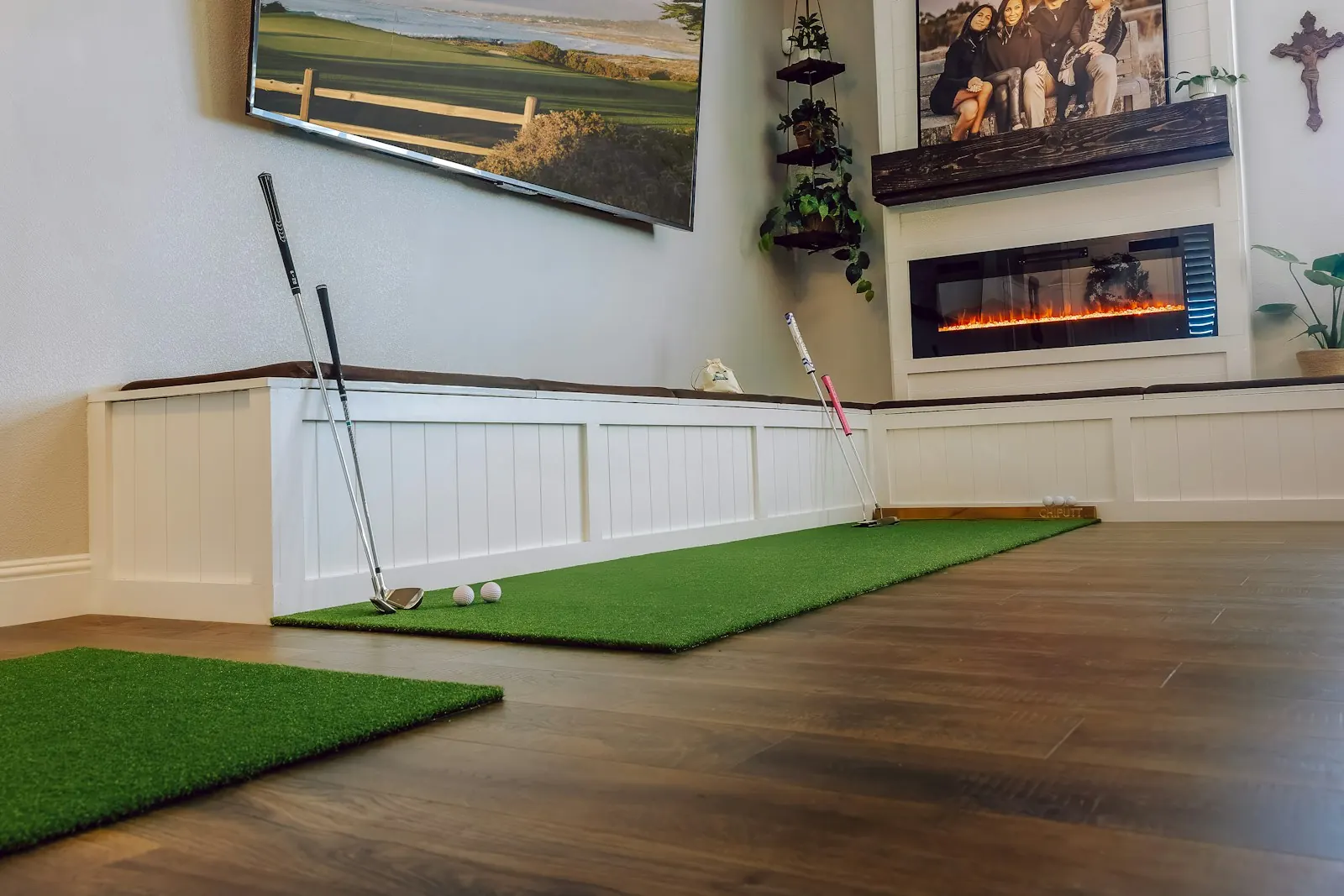
Simulator putting varies a lot depending on the setup. Some bays use automatic gimmes inside a set distance. Others have you putt on a flat mat and read a line off the screen. Either way, you're rarely dealing with real grain, real speed changes, spike marks and the nerves of a four-footer to save par.
If your sim rounds include gimmes, take two putts off every green as a rough correction, or switch them off and see what happens.
No weather, no ground
Indoors it's always still and dry. You can turn simulated wind on in most software, but feeling a cold crosswind on the 14th and judging it is a skill a screen doesn't really train. The ground also behaves in a modelled way. Real fairways are soft after rain, firm in August, and full of little hollows that kick the ball sideways.
The sim forgives your decisions
On a sim, a bad tee shot costs you less mentally. You're warm, it's quick, and the next shot comes along in seconds. A lot of people also take a few more aggressive lines than they would on their own course, and they get away with it because the lie at the end is still flat.
On the course you might find the ball sitting down in thick rough on a downslope with a tree in the way. That shot doesn't exist on most sims. The course management you need for it never gets practised.
Alignment is easier
Standing square to a straight screen with a target line in the middle is easy. On a real course, the tee box points somewhere odd, the fairway bends, and you have to pick your own line. Sim golfers often find their aim drifts once they're outdoors.
So is your sim handicap meaningless?
No. Your sim numbers tell you a lot about your strike, your speed, your start line and your carry yardages. That's good information. It just covers a narrower slice of golf.
The useful question is which gaps between sim and course are costing you the most. For most club golfers, sloping lies and short-game touch are the big ones. Wind and course management come next.
How to close the gap
- Play from worse lies on purpose. Hit some of your shots off a slope if your setup allows it. A garden bank, a sloped board or a tilting platform all count.
- Switch off gimmes. Putt everything out, or at least anything outside a grip length.
- Turn the wind on. Pick a breezy setting and leave it there for a few sessions.
- Change club every shot. Don't hit ten 7-irons in a row. Play the course like a real round.
- Hit off a better mat, or check contact. A strike spray or foot powder on the face tells you where you really hit it.
- Practise like you play. Full routine, one ball, pick a target, accept the result. There's more on that in how to practise like you play.
Your sim score and course score will probably never match exactly. They don't need to. You want the sim to prepare you for the course, and flat ground only gets you part of the way.
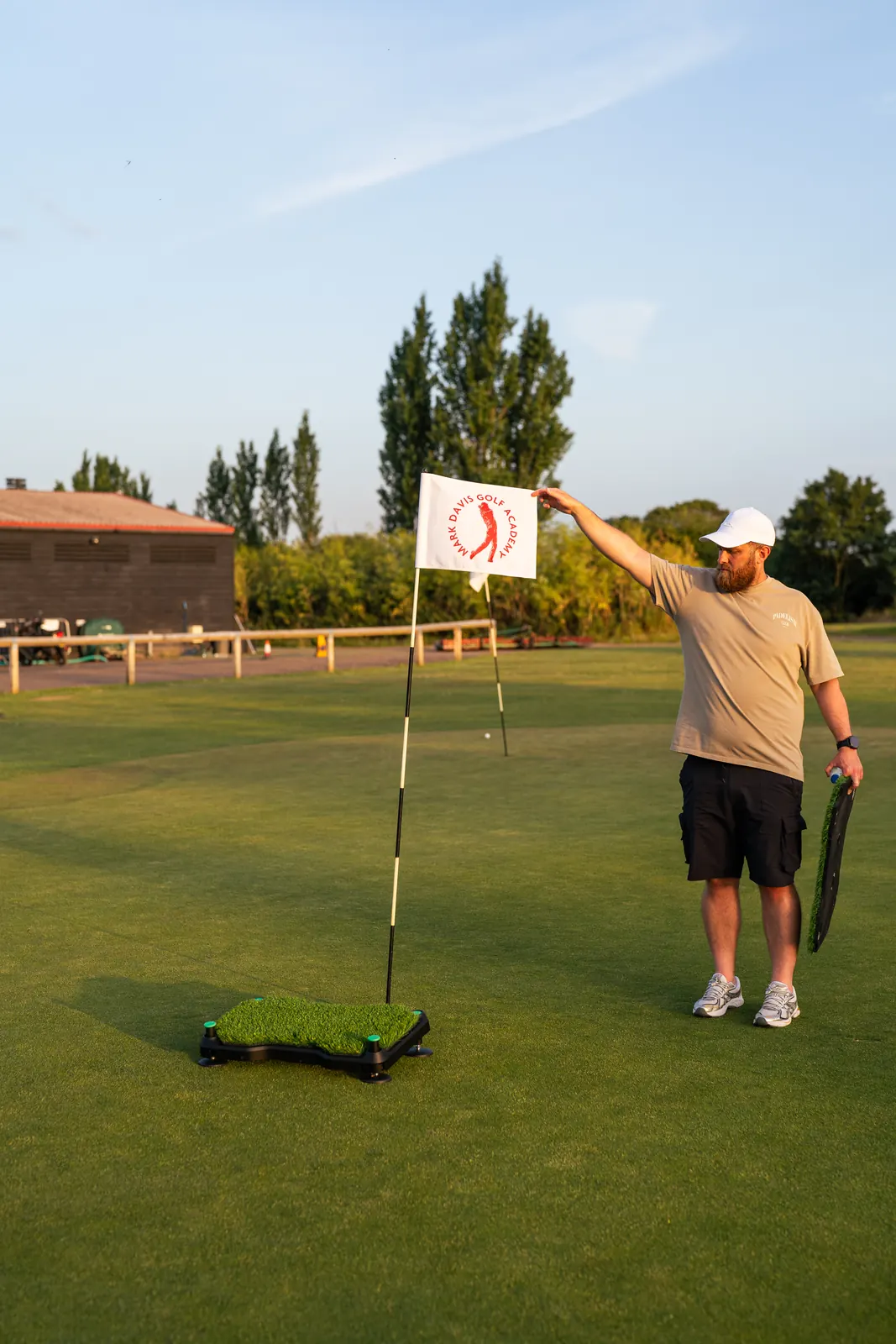
Libro is our answer to the flat-lie part. It's a portable platform that tilts to give you uphill, downhill and sidehill lies, up to 7 degrees along its length and 13 degrees across, and it works with any launch monitor or simulator. Set a lie with the cam lock, use the engraved height lines to find it again next time, and hit the shot your course keeps giving you. Reserve one for £10 ahead of Kickstarter in early 2027.