Uneven lies cost high handicappers more than the one bad shot they produce. The expensive part is what comes next: the wrong club choice from the slope, the aim straight at the flag, the next shot played from trouble, and the chip from a bank that rolls off the other side. If you play off 20 or more, a good chunk of your doubles probably start with a sloping lie you didn't respect.
I can't give you a number for how many shots, because nobody has measured your round. But go back through your last scorecard and look at the doubles and worse. A lot of them will have a moment where the ball was on a slope and you hit the shot you'd hit from a flat lie.
The shot after the shot
Here's how a typical hole goes wrong. Decent drive, finishes on a downslope in the fairway. You've got 170 yards to the green and it's a 5-iron on the flat, so you hit 5-iron. The slope takes loft off, you hang back trying to help it up, and you top it 60 yards. Now you're 110 out, still on the hill, a bit annoyed.
The first mistake cost you maybe a shot. The second shot from a similar slope, hit with frustration, costs you another. A pitch and two putts later, you've written down a seven on a par four you drove well.
Lower handicappers get bad lies too. What they do better is limit the damage, and the first decision from the slope is where that happens.

Where the shots go
Club choice. The big one. Reaching for a 3-wood or a long iron from a sloping lie because the distance says so. Those are the hardest clubs to hit from a flat lie, and a slope makes them harder. The post on fairway woods from a downhill lie is honest about when to leave the wood in the bag.
Aim. Aiming at the flag when the slope will move the ball. A ball-above-feet lie for a right-hander sends the ball left. If the trouble is left, aiming at the flag is aiming at the trouble.
Contact. Playing the ball where you always do, so the bottom of the swing is in the wrong place. Fat from uphill, thin from downhill. A practice swing on the slope would have shown you where the club wanted to hit the ground.
Going at it hard. Swinging full and fast because you need the distance. Slopes throw you off balance, and speed makes it worse.
Around the green. Slopes don't stop at the fairway. A chip from an uphill bank pops up and stops short. A chip from a downhill lie runs and runs. Many high handicappers play every chip the same way, and the slope decides where it ends up. The guide to chipping from a downhill lie is worth a read, because those are the ones that run off the green.
Why it hurts higher handicaps more
A single-figure player hits most greens or gets close. A slope might cost them a bit of accuracy, and they recover with a decent chip.
A higher handicapper often doesn't have that margin. The slope turns a so-so shot into a bad one, and then the recovery shot is from rough, or behind a tree, or another slope. Mistakes stack. Bogey golf is usually lost one double at a time, and sloping lies are a common way in.
There's also a confidence cost. Once you've topped a couple from downslopes, you start dreading them. That tension makes the next one worse.

What to change this week
You don't need a new swing. You need a new habit for the first shot off a slope.
- Take a practice swing on the slope. See where the club brushes the grass. Put the ball there.
- Pick a club you trust. If you're debating between a hybrid and a 3-wood, the slope just decided for you.
- Aim for the miss. Allow for the direction the slope will send it.
- Swing at about 80 percent. Take one more club if you need the distance.
- Pick a flat spot as your target if the green is a stretch. The post on laying up to a flat lie explains why this is smarter than it sounds.
Number five is the one people resist. It feels like giving up a shot. But a confident 7-iron to a flat bit of fairway, followed by a full wedge, is very often a bogey at worst. The hero 3-wood from the downslope is how the seven happens.
Test it on your own card
For your next three rounds, mark every hole where your ball finished on a noticeable slope. Next to it, write the score. You don't need anything fancy, a dot on the card is enough. After three rounds, look at whether those holes average higher than the rest. If they do, you've found shots you can save without changing your swing at all.
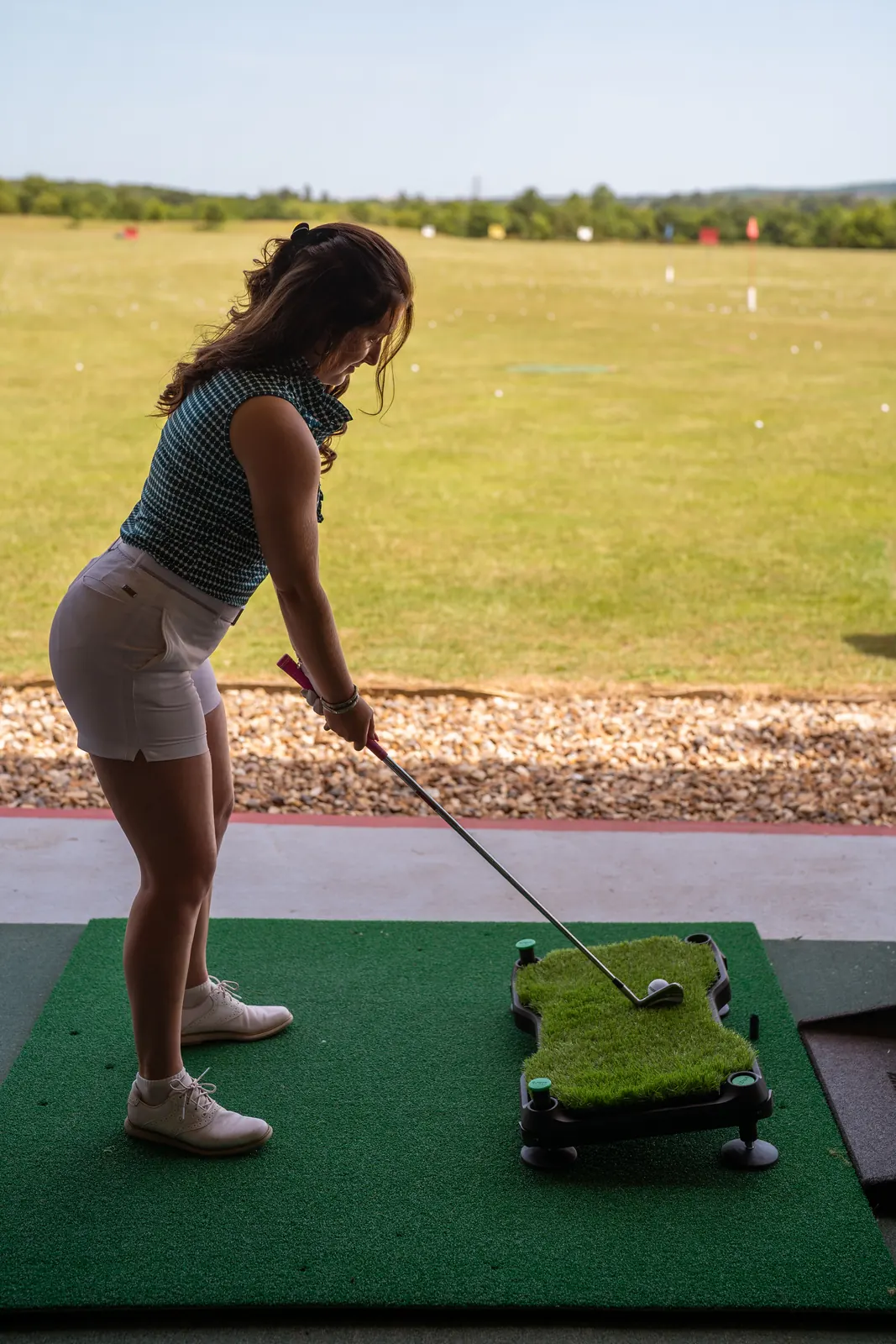
Then practise it. Most range practice happens on a flat mat, which is the one lie they'll never have on the course except on the tee. Libro is a portable platform that tilts to recreate uphill, downhill and sidehill lies, so you can practise the slope shots that are costing you. It needs no batteries and no subscription, and you can reserve one for £10, fully refundable.