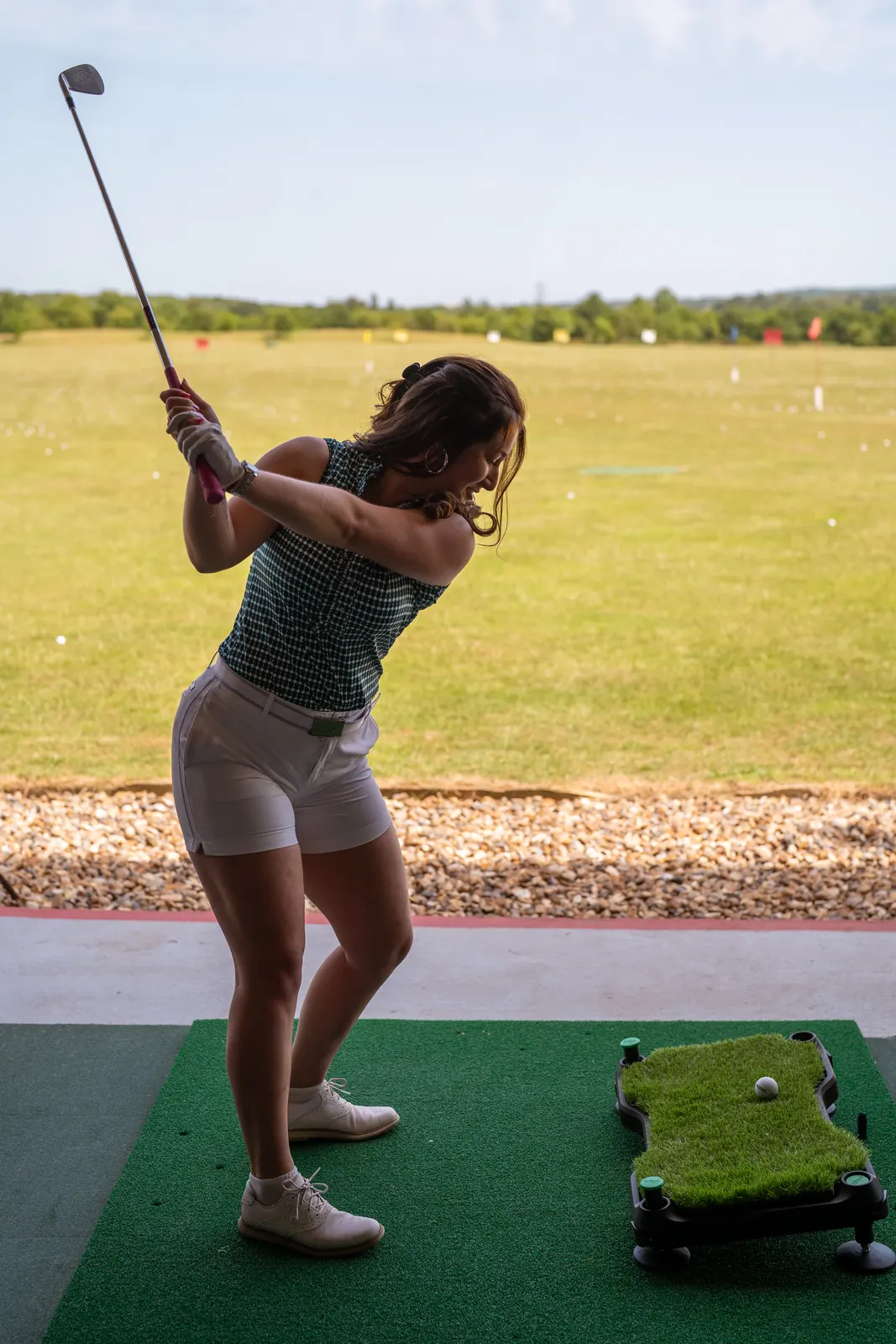
Block practice means hitting the same shot over and over, like twenty 7-irons at one flag. Random practice means changing something every ball: club, target, shot shape or lie. Motor-learning research has found for a long time that block practice tends to look better during the session, while random practice tends to hold up better later on and in new situations. For golfers, that's a strong argument for mixing up most of your range time.
That's the headline. The detail is more interesting, and there's a place for both.
Why hitting the same shot feels so good
Hit ten 7-irons in a row and something nice happens. By ball six you've found a rhythm. The strike gets better, the dispersion tightens, and you walk off thinking you've sorted it.
What's happened is that your brain has stopped solving the problem. After the first couple of balls it already has the answer loaded. Same club, same target, same lie, so it just repeats the last swing with small tweaks. That's useful for some things, but it's a long way from what happens on the course, where you hit one driver, then a 6-iron from a hanging lie, then a chip, then a putt, and never the same shot twice in a row.
So the range session felt great and Saturday felt like a different sport. Most club golfers have lived that.

Contextual interference, in plain words
Researchers call the effect "contextual interference". It sounds technical but the idea is simple.
When you switch between tasks, each new shot interferes a little with the last. You can't just copy the previous swing. You have to look at the target again, choose the club, picture the shot and set up for it. That extra work makes practice feel harder and the results in the session are often worse.
The payoff comes afterwards. Because you've had to rebuild the shot each time, you get better at rebuilding it. When you come back days later, or face a slightly different version of the shot, the random group usually does better than the block group. The block group was better at the practice. The random group was better at the test.
A couple of honest caveats. The effect isn't the same for everyone or every skill, and the size of it varies. Beginners who can barely make contact often do need some repetition before variety helps. So treat this as a strong general tendency, with exceptions.
When block practice is the right tool
There are times you want the repetition.
- Learning a new move. If a coach has changed your grip or your takeaway, you need reps with feedback before you can mix it into anything.
- Basic contact. If you're topping half your shots, get a few clean ones in a row first.
- Warming up. A handful of the same wedge to get loose makes sense.
The mistake is stopping there. Ten balls of block work to groove the feel, then switch.
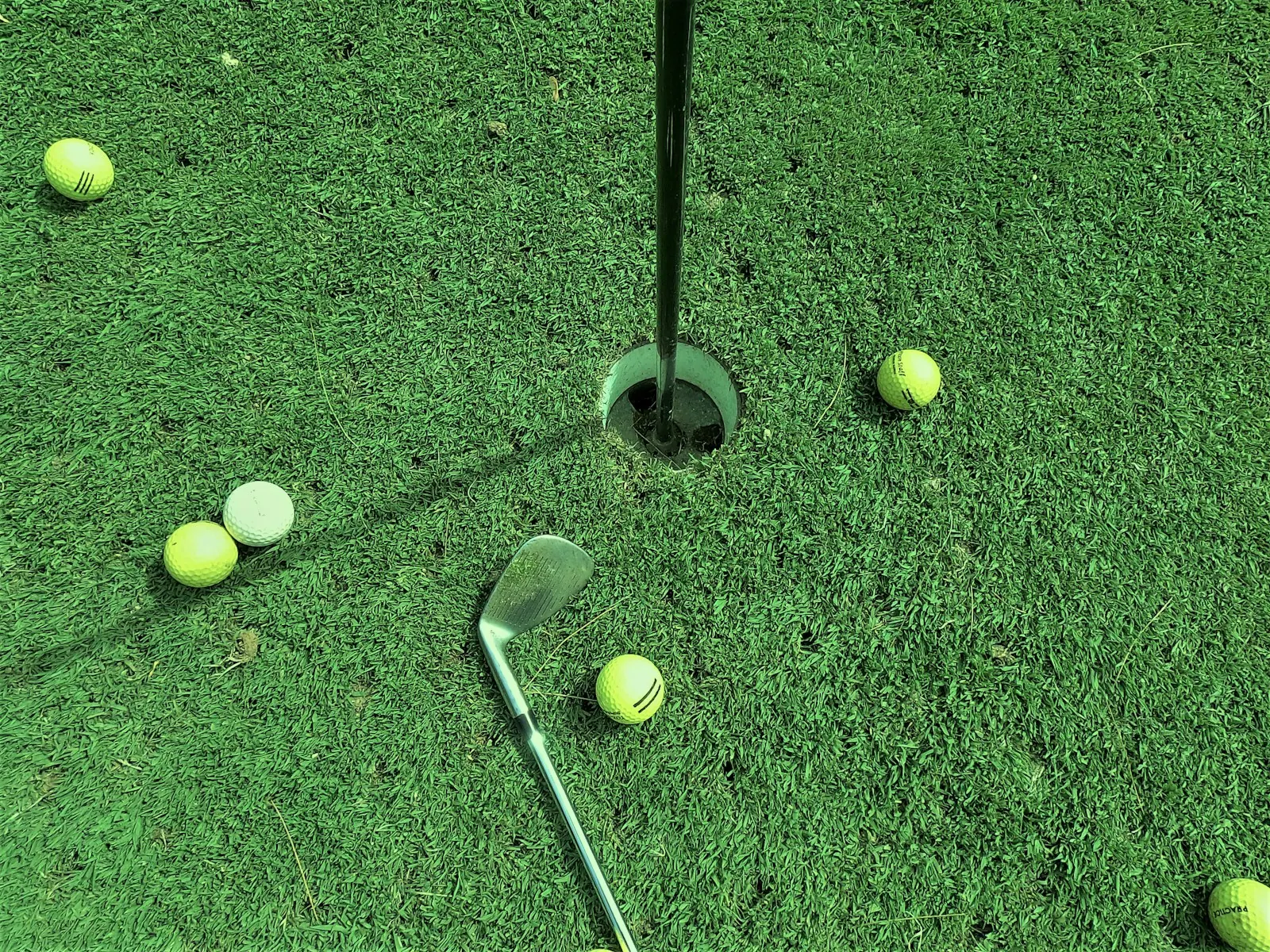
What random practice looks like on a range
It doesn't need to be complicated. Pick three clubs and three targets. Never hit the same club twice in a row, and go through a full routine every ball.
Or play your home course in your head. First hole, driver. Second shot, 8-iron to a back flag. Then a 50-yard pitch. Then the next tee. If you've written down which shots your course keeps giving you, rehearsing your home course turns this into a proper plan.
Other easy ways to add variety:
- Change the target every ball, even with one club.
- Alternate a full shot with a three-quarter shot.
- Hit a draw, then a fade, then straight.
- Change the lie. A flat mat is the same lie every time, which makes every session a bit "blocked", even if you never meant it to be.
That last point gets missed. You can change clubs all day on a range mat and you're still practising one lie. On the course, the ball is above your feet on one hole and on a downslope the next, and the swing has to adjust each time. Mixing in sloping lies is random practice in the most literal sense, because every slope asks for a slightly different setup. The four uneven lies post covers how each one changes the shot.
A simple way to blend them
Here's a split that works for most club golfers on a 50-ball session:
| Part | Balls | Type |
|---|---|---|
| Warm up | 8 to 10 | Block, one wedge |
| Swing change or feel | 10 to 12 | Block, one club, one target |
| Play the course | 20 to 25 | Random, change club or lie every ball |
| Finish | 5 | Random, with a score |
As a skill gets more settled, shift the balance towards random. If you've been working on the same move for a month and it holds up in block practice, it's time to make it hold up when everything else changes too.
The bit nobody likes
Random practice will make your range sessions look worse. You'll hit more poor shots. You won't get that "on a roll" feeling as often. That's normal and it's the point. You're practising the hard part of golf, which is producing one decent shot with no second go.
If you want a ready-made structure, the 20-minute practice plan builds the random block in for you.
Varying the lie is the hardest thing to do on a range or in a sim bay. Libro is a portable platform that tilts to recreate uphill, downhill and sidehill lies, so you can change the slope between shots with a cam lock in seconds and then set the same lie again later from its engraved height lines. It works with any launch monitor or on its own, and you can reserve one for £10 ahead of the Kickstarter in early 2027.