
A good UK winter practice plan splits into three parts: one session a week on technique, ideally indoors or at a covered range; short, frequent practice at home on putting, chipping and posture; and playing the course when you can, with the aim of keeping a feel for real lies. Keep it simple, expect the weather to wreck some weeks, and use the time for the jobs that are hard to fit in during the season.
Winter in the UK is honestly great for practice, if you plan for it. Courses close or go on to temporary greens, fairway mats appear, the evenings vanish, and the ground is soft enough to plug your ball. Plenty of golfers just stop. Even a light plan puts you ahead in April.
What winter is good for
The playing season leaves little time for real changes. You're always about to play a medal, so you don't want to tinker. Winter removes that pressure.
Good winter jobs:
- A swing change. If you've been meaning to fix your grip, posture or a long-standing slice, this is the time. Book a lesson or two in November and give yourself months to bed it in.
- Short game and putting. These need little space and they're where many club golfers can save shots fastest.
- Fitness and mobility. Golf-specific stretching and strength work helps your turn and your balance, both of which matter on slopes.
- Sloping lies. Winter courses are soggy and you don't see many clean lies. It's a good time to practise them away from the course so you're ready when the ground firms up.
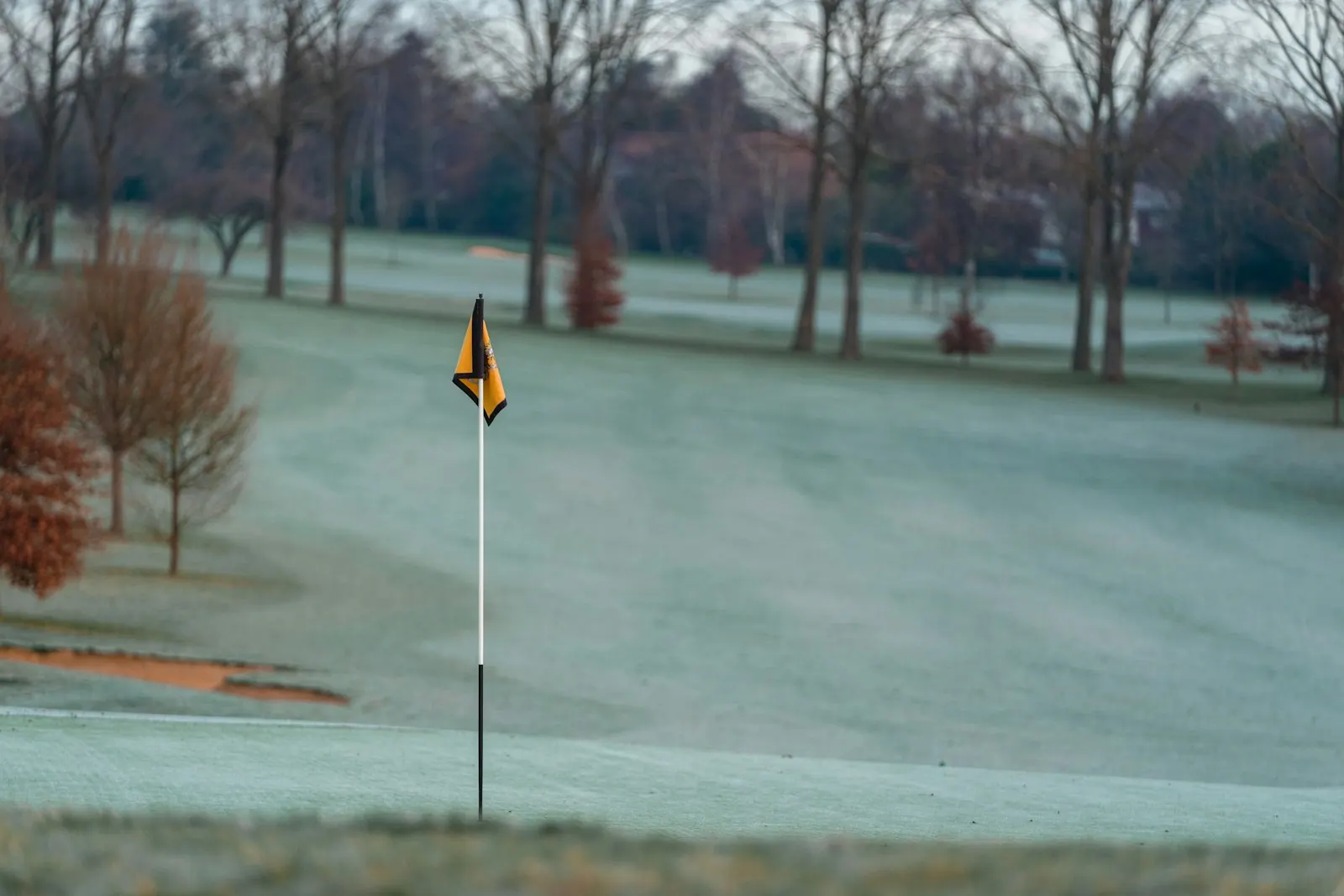
Where to practise when it's grim
Covered or floodlit ranges. The obvious choice. Bays are covered, many are heated or have heaters, and floodlights mean you can go after work. Use them for technique. Be aware they're flat and the mats forgive fat shots.
Indoor simulators. Sim bays let you hit full shots with ball-flight data, and many let you play virtual courses. They're good for keeping your swing going and checking distances. The post on whether simulator golf is worth it over winter is an honest look at what you get. One catch: sims give you flat lies every time. The post on golf simulators only giving you flat lies explains why that matters.
At home. Putting on the carpet, chipping foam balls into a laundry basket, posture work in front of a mirror, a net in the garage if you have the space. Ten minutes most evenings adds up over a winter. There are ideas in practising uneven lies at home too.
The course itself. On the days it's open, play. Winter golf teaches you to handle wet lies, wind and cold, and it keeps your on-course decision-making sharp. Many clubs bring in preferred lies or require fairway mats over winter. Check your club's local rules, and if you're on mats, remember that's not the lie you'll get in spring.
A simple weekly plan
You won't hit this every week. That's fine. Treat it as a default.
| When | What | Time |
|---|---|---|
| One weekday evening | Range or sim: technique work, one swing thought, then rotate clubs to targets | 45 to 60 minutes |
| Three or four evenings | Home: putting, chipping, mirror posture work | 10 to 15 minutes |
| Weekend | Play if the course is open. If not, a longer short-game session or a second sim visit | As long as you've got |
| Once or twice a week | Mobility and balance work | 15 minutes |
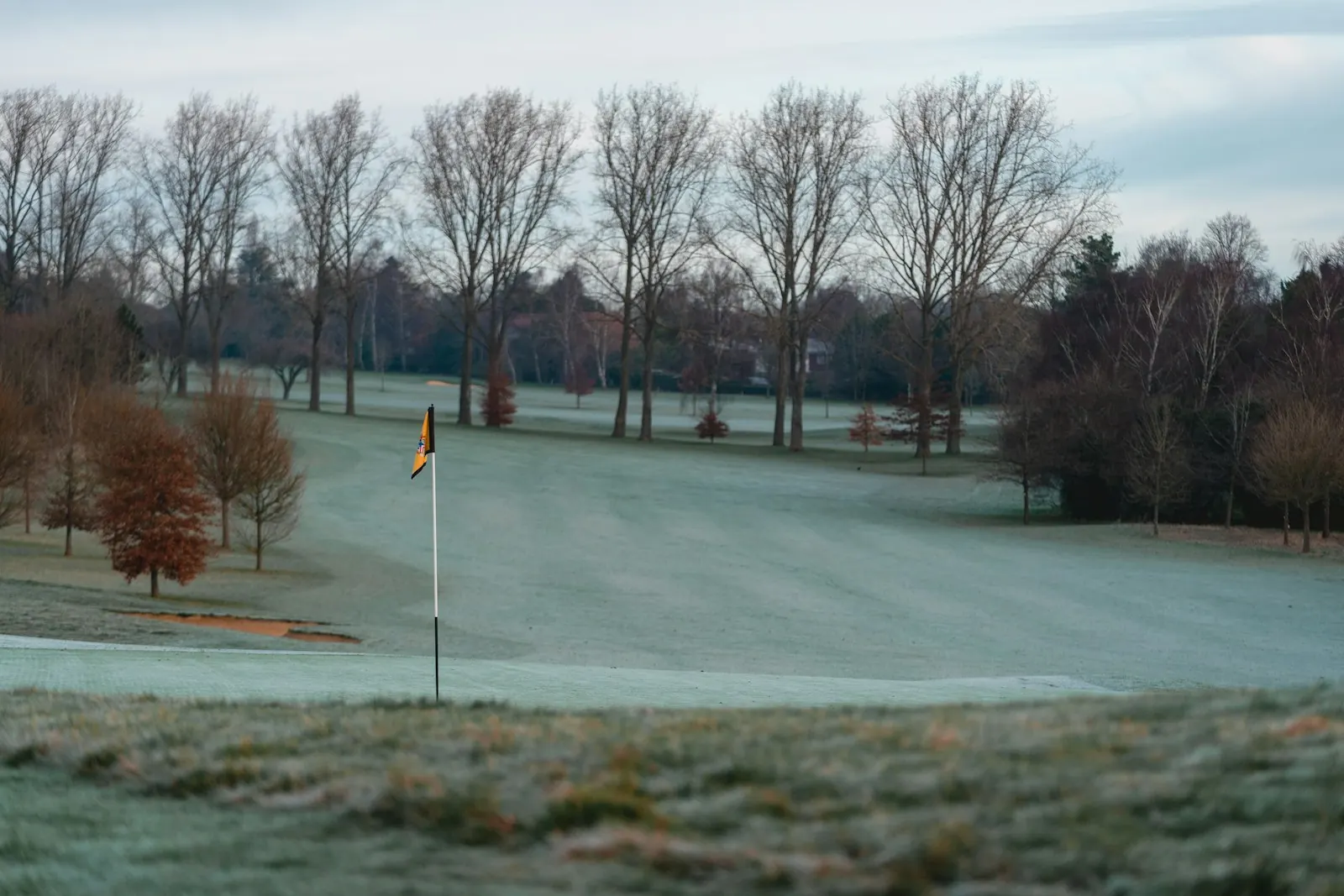
How to structure the range or sim session
Spend the first part on your winter project, whatever you're changing. Slow swings, half swings, one thought. Then spend the second half hitting different clubs to different targets with a full routine each time, as if you were playing. Finish with a few shots you'd hit on your first tee in spring.
If you're on a sim, play a few holes at the end and pay attention to how often you get a flat lie. Every time. On your real course in spring, you won't.
Arriving in spring ready
Two things catch people out when the season starts.
The first is that the course is suddenly firmer and the ball rolls. Your distances off the tee will change, and chips will run more. Give yourself a few rounds to adjust before you judge your winter work.
The second is that the lies come back. All winter you've hit off level mats, flat sim floors and preferred lies. Then your first good drive of the season stops on a downslope and you top it. That's why it pays to keep some slope practice in the winter plan, even a little.
A few minutes in each session on uphill, downhill and sidehill set-ups, or on a garden slope when the weather allows, keeps the feel alive. The uneven lie drills post has seven to pick from.
Winter is when slope practice is hardest to find and most useful. Libro is a portable platform that tilts to recreate uphill, downhill and sidehill lies, and it works with any launch monitor or simulator, or on its own, so you can add real slopes to your garage net or sim bay over the winter. It's coming to Kickstarter in early 2027, and you can reserve one now for £10, fully refundable.