The best drills for uneven lies teach you three things: where the club hits the ground on a slope, how to stay balanced, and how much the ball moves. Here are seven you can start this week. A couple need a real slope, a couple work in the garden or living room, and the rest fit into a normal range or practice ground session. None take more than 20 minutes.
For the set-up on each lie, the pillar guides cover uphill, downhill, and ball above and below your feet. These drills are about building the feel once you know the basics.
1. The brush drill
Needs: any slope, no ball.
Stand on a slope and make practice swings with a mid iron. Watch where the club brushes the grass. Put a tee in the ground at that spot. Now change the slope, move a few yards to a steeper bit, or turn round so uphill becomes downhill, and do it again.
You'll see the brush mark move forward on upslopes and back on downslopes. That's where the ball needs to be. Once you've watched it happen a dozen times, you'll trust the practice swing on the course. There's more on this in reading the lie with your practice swing.

2. Hold for three
Needs: a slope and some balls, or a range.
Hit ten shots from a sloping lie. After each one, hold your finish and count to three before you move. If you have to step to stop yourself falling, that shot doesn't count. Keep going until you've got ten that count.
It sounds simple. It's annoyingly hard on a steep slope, and it teaches you how much you need to ease off.
3. The 60-80-100 ladder
Needs: a slope, one club, a few balls.
From the same sloping lie, hit one shot at what feels like 60 percent effort, one at 80 and one at full. Notice where each goes and how solid each strike felt. Repeat three times.
Plenty of players find the 80 percent shot is the best combination of distance and control from a slope, and that the full swing loses the most. But you might not. The point is to find your own sweet spot so you know how hard to swing when it matters.
4. The aim-off test
Needs: a sidehill slope, alignment sticks or clubs on the ground, one club.
Set up on a ball-above-feet lie. Lay a stick on the ground pointing straight at a target. Hit five balls aiming straight down the stick and note where they finish. Then move the stick to aim right, by however much you think you need, and hit five more. Did they finish nearer the target?
Do the same on a ball-below-feet lie aiming left. Write the results down. After a few sessions you'll have your own numbers. The post on how much to aim off on a slope gives you starting points.

5. The book drill
Needs: a thick book or a low step, no ball, at home.
Put the book under your trail foot to fake an uphill stance, then under your lead foot to fake a downhill one. Make slow practice swings, setting your shoulders along the line from foot to foot. Feel where your weight sits and how hard it is to turn through.
Be honest about what this is. It only tilts your feet. The "ball" isn't on a slope and nothing tells you if you've hit it properly. It's a rehearsal for posture and balance, and it's useful for that. It won't teach you contact or ball flight. For more home options, see practising uneven lies at home.
6. Mixed bag
Needs: a short-game area or practice ground with some slopes.
Take five balls and five different lies. Uphill, downhill, ball above, ball below, flat. Play one ball from each, with a different club each time, to a different target. Full routine every shot. Then collect them and do it again in a different order.
This is closer to how golf is played than hitting a bucket from one spot. It's also more tiring than it sounds, which is a good sign.
7. Two-ball course practice
Needs: a quiet course, and your club's permission.
Many clubs don't allow practice on the course, and others only allow it at certain times. Check first and always give way to anyone playing. If it's allowed, play a few holes in a quiet evening and, every time your ball finishes on a slope, drop a second ball next to it. Play both. Try something different with the second ball, a different club or a different aim.
Comparing two balls from the same slope, a couple of feet apart, shows you very quickly what the slope is doing and what your changes do. Repair your divots and pitch marks.
Fitting them into a week
You don't need all seven. A realistic week might be:
| Day | Drill | Time |
|---|---|---|
| Monday evening | Book drill at home | 10 minutes |
| Wednesday | Brush drill and hold for three, practice ground | 20 minutes |
| Saturday before the round | Mixed bag in the short-game area | 15 minutes |
Then use the brush drill on the course during your round, every time you find a slope.
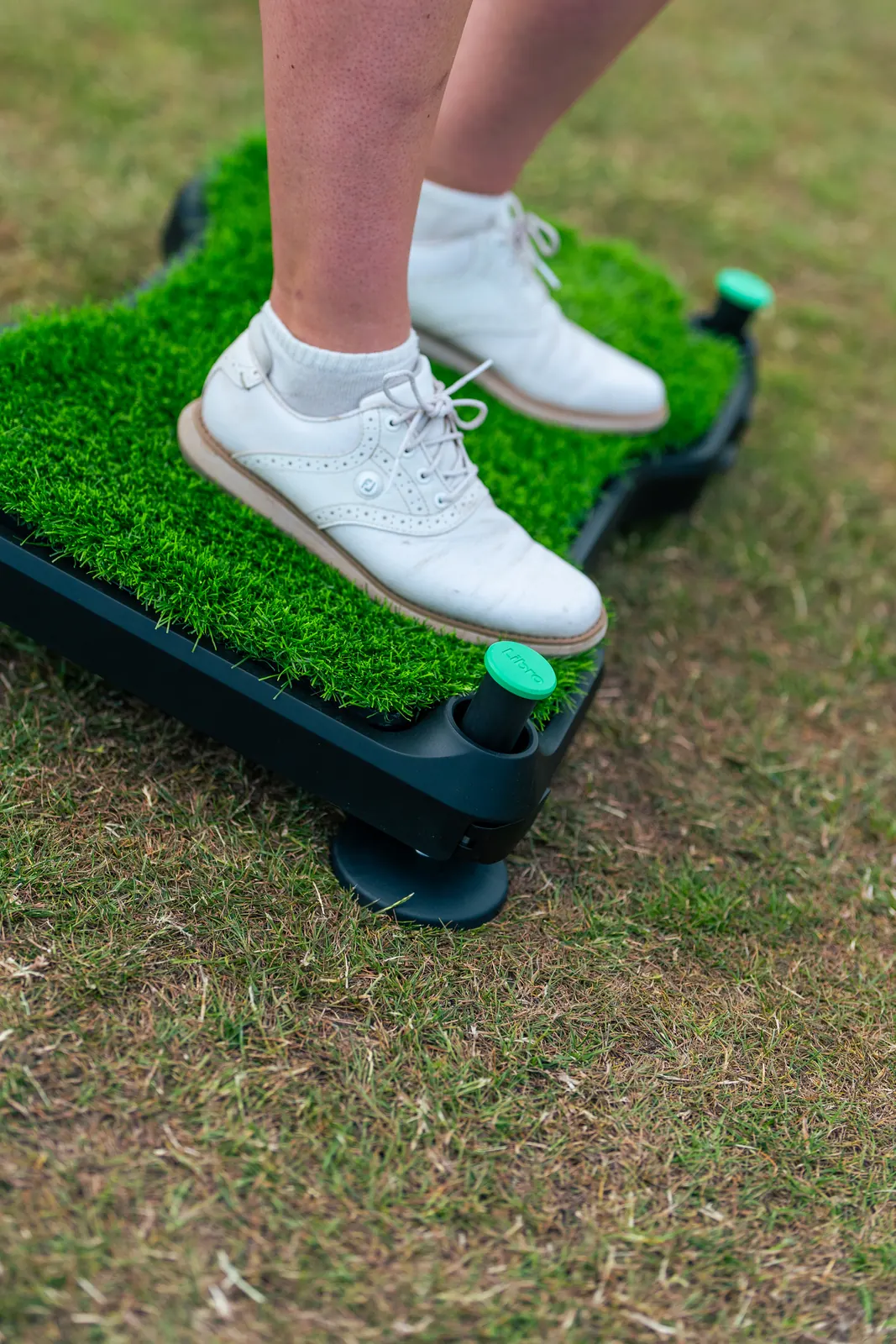
The tricky part with most of these is finding the slope in the first place, and finding the same slope again so you can see if you're improving. Libro solves both. It's a portable platform that sets uphill, downhill and sidehill lies in seconds with a cam lock, and the laser-engraved height lines let you set the exact same lie next time and count your reps on it. Reserve one for £10, fully refundable.