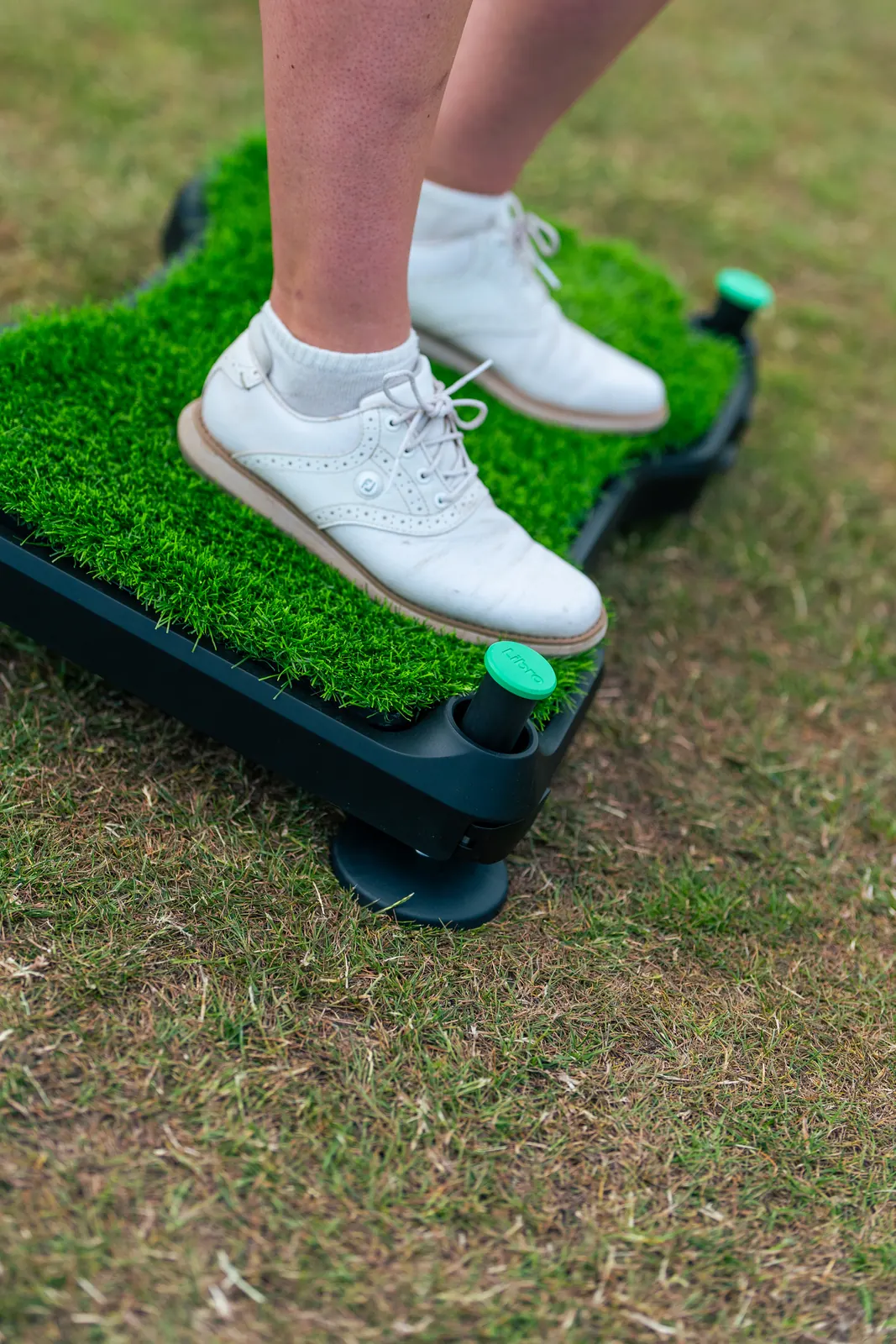
On an uphill lie, tilt your shoulders so they roughly match the slope, play the ball a touch further forward, take at least one more club and aim a little right. For a right-hander the ball will usually fly higher than normal, come up shorter and drift left, so you build all of that into the plan before you swing.
An uphill lie is any lie where your front foot (the left foot for a right-hander) sits higher than your back foot. You get them on the far side of a hollow, on banks short of raised greens, and all over links fairways. Most club golfers find them friendlier than downhill lies, because the slope helps the ball into the air. They still cost shots, mainly through two misses: the approach that finishes short, and the pull that starts left and stays there.
What the slope does to the ball
When your shoulders follow an upslope, the club travels upwards through impact more than it would on flat ground. That adds launch and, in effect, adds loft. A 7-iron starts to fly more like an 8 or a 9. Higher flight means less carry and very little run once it lands, which is why uphill approach shots so often end up in the front bunker.
The leftward tendency comes mostly from your body. On a slope your weight wants to stay on the back foot, and it is hard to turn your hips through as freely as usual. When the body stalls, the arms and hands take over and the clubface closes earlier. For most players that shows up as a pull, or a draw that turns over more than they planned.
How much of this you get depends on how steep the slope is. On a gentle bank you might barely notice. On a proper upslope you can lose a club or two of distance and miss well left.
Setting up
Shoulders and spine
Tilt so your lead shoulder is higher than your trail shoulder and the line across your shoulders runs roughly parallel to the ground. This is the single biggest part of the setup. It lets the club swing up the hill through impact instead of crashing into it.
Weight
Matching the slope naturally puts a bit more weight on your back foot. That is normal and fine. The job is to stop it getting worse during the swing. Flex your trail knee a little more than usual and feel braced against it, so you are not falling further down the hill as you swing back.
Some coaches prefer you to lean into the slope instead, keeping more weight on the front foot as you would on the flat. That can work on a gentle slope. On anything steeper it tends to drive the club into the ground, and most mainstream teaching sticks with the shoulders-to-slope setup.
Ball position
Play it a little further forward than normal, towards the higher foot. Because your shoulders are tilted, the low point of your swing moves forward too, and the ball needs to sit near where the club bottoms out.
A practice swing will show you exactly where that is. Make a swing next to the ball, watch where the club brushes the grass, and set the ball around that spot. It takes five seconds and saves a lot of guesswork.
Grip and stance
Gripping down an inch gives you a bit more control and is worth doing on a steeper slope. A slightly wider stance helps with balance. Neither is compulsory on a mild upslope.
Aim
Aim right of your target to allow for the pull. How far right is the question everyone asks, and the honest answer is that it depends on the slope, the club and your swing. A little on a gentle slope, more as it gets steeper, and more with a shorter iron. How far to aim off on a sloping lie has some rough starting points, but your own misses will teach you more than any rule.
Choosing the club
Take more club. One extra is the usual starting point. On a steep slope, two. If the yardage says 8-iron from flat ground, an uphill lie usually wants a 7, sometimes a 6.
Be careful not to confuse an uphill lie with an uphill shot. A shot played up to a raised green needs extra club because of the elevation, even from a flat lie. If you are on an upslope and also hitting up to a raised green, both effects add together, and you may need more club than feels sensible. The difference is explained in elevation change vs sloping lie.
One upside of uphill lies is that longer clubs become easier to hit. The slope helps a hybrid or fairway wood get airborne, so from a decent lie on a gentle upslope, a long club is a far better bet than it would be off a downslope.

Making the swing
Swing up the slope. On the way through, let the club follow the ground so it rises with the hill. Your finish will feel a little higher and a little more on your back side than usual, and that is fine.
Keep the pace smooth. You have already taken extra club, so there is no need to hit it hard, and a slightly shorter swing that holds its balance will find the middle of the face more often than a full lash. If you can hold your finish for a couple of seconds, you probably made a good swing.
Keep turning. A lot of the pull comes from the body stopping at impact. Feel your chest keep rotating towards the target after the ball has gone. It will not remove the left tendency completely, but it stops it getting out of hand.
Common misses and what causes them
| Miss | Usual cause |
|---|---|
| Fat | Ball too far back, or fighting the slope by forcing weight forward |
| Short of the green | Not enough club for the extra height |
| Pull or hook | Body stalls, hands flip; not enough aim right |
| Push right | Holding the face open to avoid the pull |
The fat shot is the one that hurts most, because it usually goes nowhere. On an upslope the ground behind the ball is lower and the ground in front is higher, so a club that bottoms out even slightly early catches turf first. If this is your miss, the post on why you hit it fat from uphill lies is worth a read.
The push is often a sign you have overcorrected. Golfers who have pulled a few uphill shots start holding the face open through impact. Trust the aim instead and make your normal release.

On a steep upslope
As the slope gets steeper, everything above gets bigger. More club, more aim right, shorter swing. At some point the lie stops being a normal shot and becomes a damage-limitation job. If you cannot stand comfortably or keep your balance on a practice swing, take a more lofted club, make a short punchy swing and get it back in play.
You will often meet an upslope combined with a sidehill lie. When the ball is also above your feet, both slopes push the ball left, and the aim and club choice change again. That combination has its own post on uphill with the ball above your feet.
Quick answers
Do you aim left or right on an uphill lie? For a right-hander, aim a little right. The ball tends to go left.
Do you take more or less club uphill? More. One club is a sensible start, two on a steep slope.
Where should my weight be on an uphill lie? Slightly more on the back foot, with your shoulders following the slope. Brace your trail leg so you do not fall further back.
Where do I put the ball? A touch further forward than usual. Use a practice swing to find where the club brushes the ground.
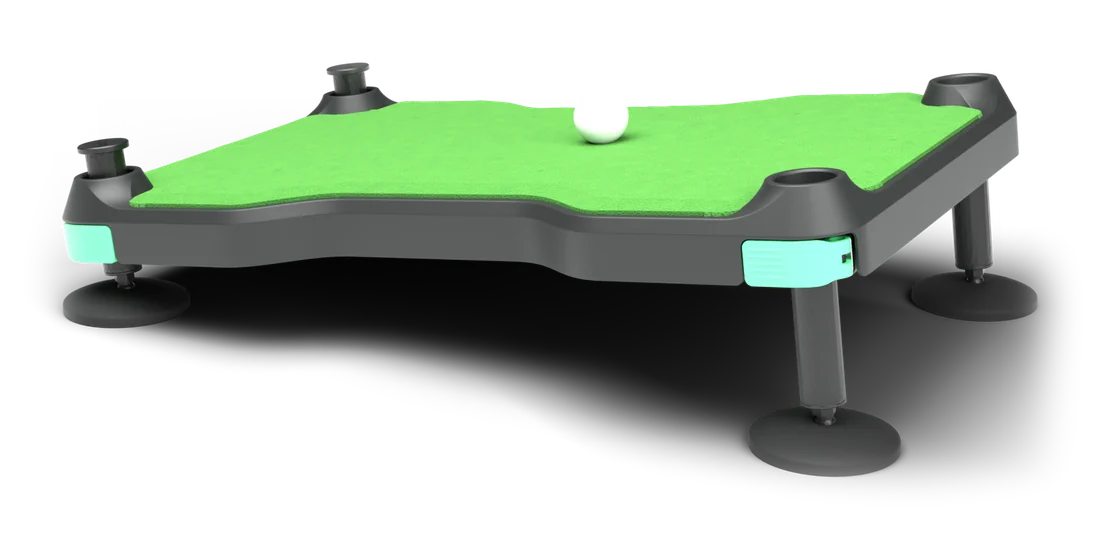
Most of us only ever meet uphill lies on the course, where you get one shot and no second go. Libro is a portable platform that tilts up to 7 degrees along its length and 13 degrees across, so you can set an upslope at home or in front of your launch monitor and hit it over and over. The engraved height lines mean you can set the same lie again next week and see if your aim and club choice have improved. You can reserve one for £10, fully refundable, ahead of Kickstarter in early 2027.