
An uphill lie is the one slope where a fairway wood is often a good idea. The slope adds launch, so a 3-wood gets airborne more easily than it would from a flat or downhill lie. The trade-off is that the ball flies higher, carries a bit less, stops sooner and tends to go left for a right-hander. Set your shoulders with the slope, keep the ball forward, sweep it off the turf and aim a touch right.
Driver is a slightly different story, and it depends which you mean, the tee or the fairway. More on both below.
Why woods behave better uphill
Fairway woods have little loft. From a flat lie, a lot of club golfers struggle to get a 3-wood up, and from a downslope it can feel almost impossible. An upslope does the opposite. With your shoulders tilted to match the ground, the club is travelling up into the ball, which adds launch and effectively adds loft.
That is why a 3-wood from a gentle upslope can feel easy. It is behaving more like a 5-wood. The flip side is distance. More launch usually means less carry and a lot less run, so the ball will not go as far as your normal 3-wood. Still, it will often go further than the iron you might have taken, which is the whole point. The general rules for this slope are in how to hit off an uphill lie.
When to take the wood
A few conditions make a fairway wood worth it from an upslope.
The lie itself is decent. The ball is sitting up on the grass, clear of any hollow or thick rough. A wood needs a clean strike more than an iron does.
The slope is gentle to moderate. On a steep upslope you will struggle to keep your balance with a long club, and the ball will balloon up and come down short. A hybrid or mid-iron will often finish in a similar place with less risk.
You need the distance. If a 7-iron gets you to a perfect layup yardage, there is no reason to bring a wood into it. On a par 5 where the extra yards set up a much easier third shot, or a long par 4 where you would otherwise be well short, the wood earns its place.
The left side is safe. This lie tends to go left. If there is out of bounds or water down the left, the wood's pull is a bigger worry, and a more controllable club may be wiser.
Setting up
Tilt your shoulders so they roughly follow the slope, lead shoulder higher. With a long club this matters even more, because a level setup on an upslope sends the long shaft straight into the hill.
Keep the ball forward, as you would for a fairway wood normally, perhaps a fraction further forward again because the low point moves with the slope.
Your weight will settle a bit more on your back foot. That is fine. Brace your trail leg so you do not slide further back during the swing. A slightly wider stance helps.
Aim a little right of your target to allow for the pull. With a 3-wood the curve is usually smaller than with a short iron, because there is less loft to tilt the face, but the body tends to stall on an upslope and that produces a pull with any club.

The swing
Sweep it. A fairway wood wants a shallow strike, and on an upslope you can let the club follow the ground up the hill after impact. There is no need to hit down on it. Golfers who try to force their weight forward on this lie usually drive the club into the slope, which is where the big fat shots come from.
Swing at a controlled pace. Long clubs on slopes punish loss of balance more than short ones. A smooth swing that holds the finish will give you most of the distance and much more consistency.
Driver off the tee
Teeing grounds are not always flat, especially on older courses and links. If the tee box slopes uphill, a driver will launch a bit higher and may lose a little run, which on a soft day is not much of a problem.
Better still, you can often avoid the slope altogether. Under the Rules of Golf the teeing area runs two club-lengths back from the front of the tee markers, and you can tee up anywhere inside it. Take a moment to find the flattest spot, or one that gives you the slope you want. It is one of the few times in golf you get to choose your lie, and plenty of golfers do not use it. The post the tee box is the only flat lie you get makes the case for taking it seriously.
Driver off the fairway
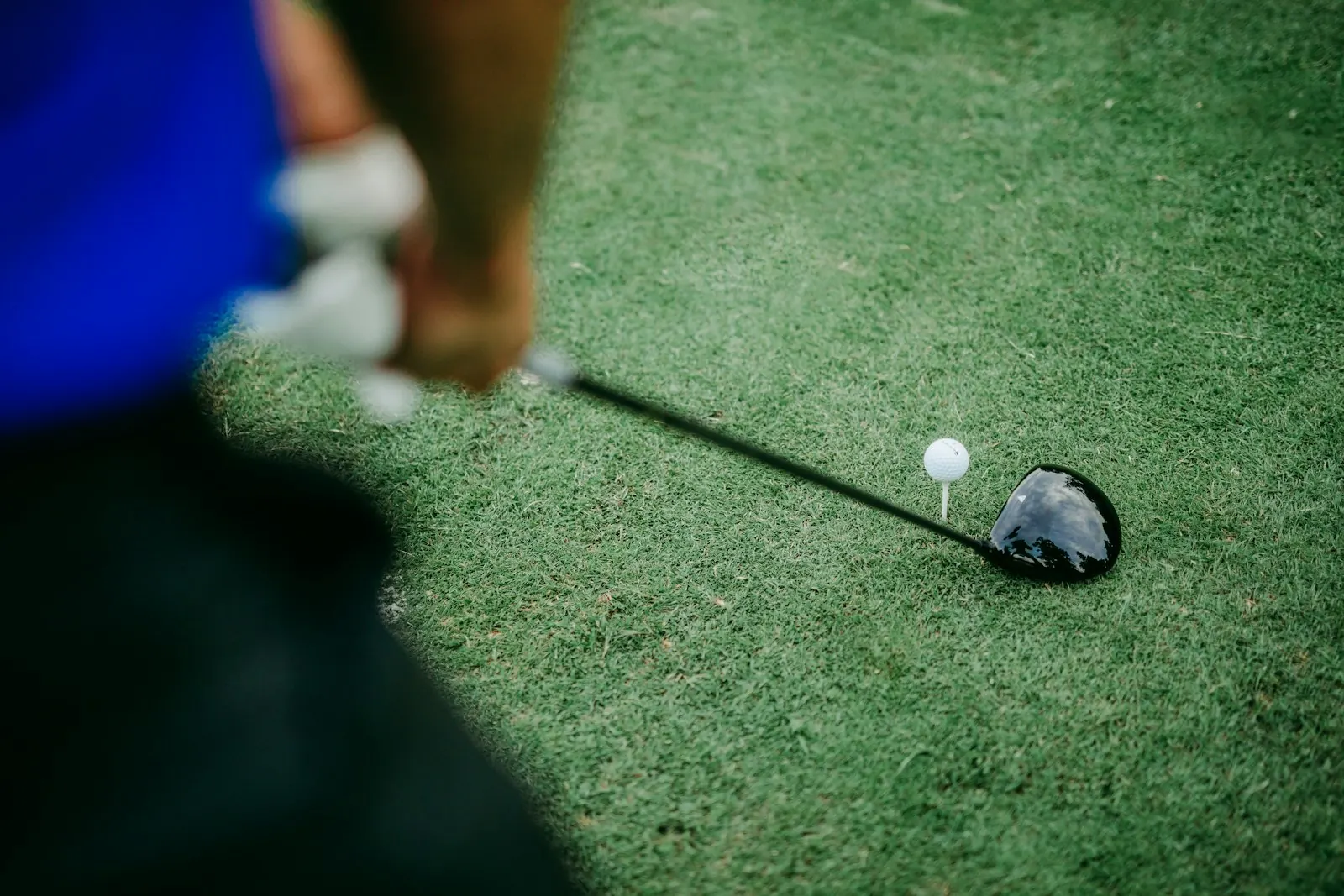
Hitting driver off the deck is a specialist shot. Very few club golfers can do it reliably from a perfect flat lie, because the driver has so little loft. If you are going to try it anywhere, a gentle upslope with the ball sitting up is the place, since the slope gives you the launch you would otherwise lack.
Even then, ask yourself whether a 3-wood would get you nearly as far with a much better chance of a clean strike. For most golfers, it will. Treat the driver off the deck as an occasional option for a confident player, and keep it well away from tight holes.
When the slope goes the other way
Everything here reverses on a downslope. The slope takes loft away, so a wood becomes much harder to get airborne and much more likely to be thinned or sliced. That decision gets its own post: fairway woods from a downhill lie.
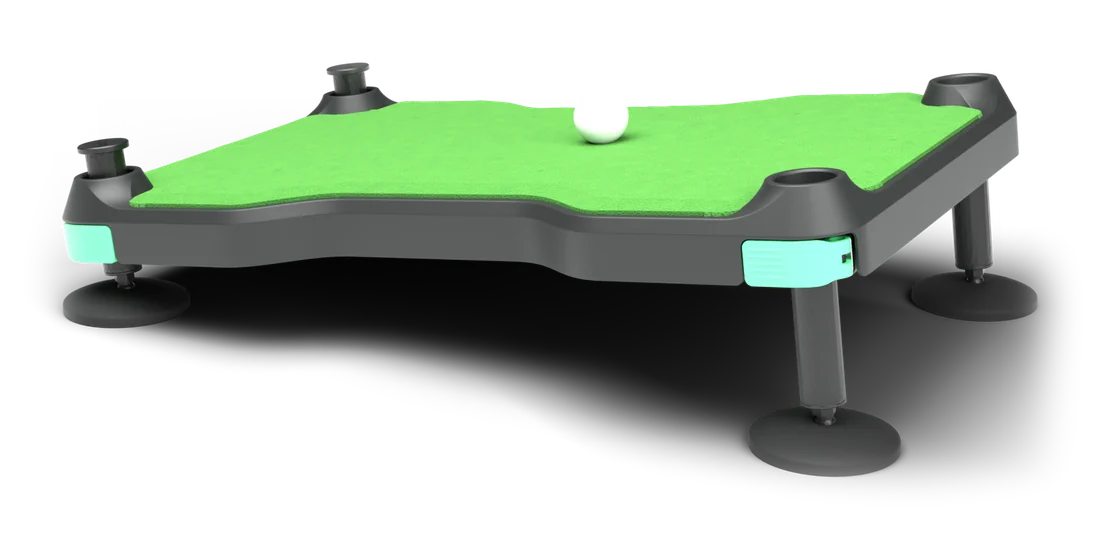
If you have a launch monitor at home or in a sim bay, it will tell you a lot about how a slope changes your woods, but only if you can hit off a slope. Libro is a portable platform that tilts up to 7 degrees along its length, so you can set a gentle upslope and compare your 3-wood and hybrid side by side. It weighs 4.97 kg and the materials are rated well beyond 250 kg, and you can reserve one for £10, fully refundable.