
An uphill lie with the ball above your feet is a double left. For a right-hander, both slopes push the ball the same way, so expect a pull or a draw that curves more than either slope would give you alone, and expect it higher and shorter too. Aim further right than feels comfortable, grip down, take extra club and make a smooth, balanced swing.
You meet this lie when you are standing on a bank that rises both towards the target and towards the ball. Think of the low side of a fairway that climbs up to the green, or the lip of a hollow you are playing out of. It looks friendly, because the ball is sitting up and the slope helps you get it in the air. Then the ball hooks into the trees on the left and you wonder what happened.
Why the two effects stack up
On their own, each slope does something specific.
The upslope adds loft and makes it harder to turn through, so the ball flies higher, comes up shorter and tends to go left. The full explanation is in how to hit off an uphill lie.
Ball above your feet tilts the toe of the club up, which points the loft of the face to the left, and it flattens your swing. That also sends the ball left. More on that in ball above your feet.
Here they both point the same direction, so they add up. And there is a knock-on effect. Because the upslope adds loft, and loft is what makes the ball-above-feet tilt send the ball left, the uphill part makes the sidehill part stronger. A wedge from this lie can go a long way left.
Setting up
Do the adjustment for each slope, then check you are still balanced.
For the upslope: tilt your shoulders so they roughly follow the ground, lead shoulder higher. Play the ball a little forward of where you normally would.
For the ball above your feet: grip down on the club, stand a little taller, and keep some weight towards the balls of your feet.
Put together, gravity is pulling you back and slightly onto your heels at the same time. That is the direction you are most likely to fall during the swing. Feel braced on your trail leg and keep enough pressure on the front of your feet that you could stay there if the swing went wrong.
A practice swing on the slope is worth more here than almost anywhere. Watch where the club brushes the grass, and notice if you finish balanced. If you wobble, the real swing needs to be smaller.
How much club
Several things are all taking distance away from you at once. The upslope adds loft, which means higher and shorter. Gripping down shortens the club. And you will probably make a slightly more compact swing for balance.
So take more club. Two more than the flat-lie yardage is a reasonable starting point on a moderate slope, sometimes more on a steep one. It feels like a lot, but most golfers who come up short from this lie have simply not taken enough.
There is a further reason to go up in club. Because the leftward effect gets stronger with more loft, a less lofted club curves less. Hitting a smooth 6-iron instead of a full 8-iron will often go straighter, as well as further.

Where to aim
Right. Further right than for either slope on its own.
How far depends on the slope, the club and your swing, so there is no fixed number that will be correct for everyone. A sensible approach is to pick a starting line a good way right of the flag, then let the slope bring the ball back. With a short iron or a wedge, aim further right again.
Two things to check. Point the clubface at the line you want the ball to start on. And set your feet and shoulders parallel to that new line. If your body is aimed right but the face is still pointing at the pin, you have effectively closed the face and you will hit an even bigger hook.
If there is trouble left of the green, give it more room than you think. A miss right on this lie is usually a short chip. A miss left can be a lost ball.
Making the swing
Keep it smooth and slightly shorter. You have taken extra club, so there is no need to force anything.
Swing with the slope. The club should follow the ground up the hill after impact, and your swing will naturally be a little flatter, more around your body. Let that happen.
Keep turning through. A lot of the hook from this lie comes from the body stopping at impact and the hands flipping over. Feel your chest keep rotating towards the target.
Resist the urge to hold the face open. You have already aimed right. Trying to stop the hook with your hands usually produces a block that goes straight right and stays there.

When the lie helps you
If the flag is tucked on the left of the green, this lie is your friend. Aim at the middle and let the slope move the ball towards the hole. It is one of the easiest places on the course to hit a draw without trying. The post on using the slope to shape the ball on purpose has more on playing with the lie.
Common mistakes
- Aiming at the flag and watching it hook into trouble.
- Not gripping down enough, so the club hits the ground first and the ball goes fat and left.
- Taking the normal club and finishing short.
- Swinging hard to make up the distance and losing balance.
Quick answers
Which way does the ball go on an uphill lie with the ball above your feet? For a right-hander, left, and usually higher than normal.
How much more club do I need? Often two more than the yardage, because of the upslope, gripping down and a shorter swing.
Why does my wedge go so far left from here? The more loft on the club, the more the face points left when the toe is up. The upslope adds even more loft.
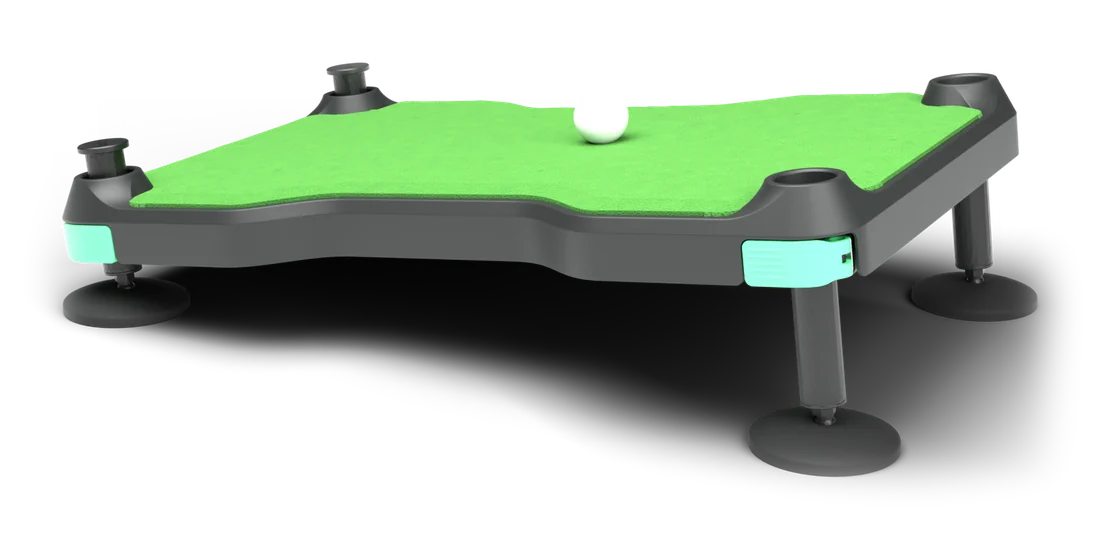
Combined lies are almost impossible to practise at a range. Libro is a portable platform that tilts up to 7 degrees along its length and 13 degrees across, so you can work on the upslope and the ball-above-feet lie at home and see exactly how far left a 6-iron goes compared with a wedge. The engraved height lines let you set the same combination again and track how your aim improves. You can reserve one for £10, fully refundable.