
Elevation change is about where the target is: above you or below you. A sloping lie is about the ground under your feet. Elevation mostly changes how far the shot plays, so you club up or down. A sloping lie changes your setup, how the ball launches and which way it curves. They're separate problems, and on hilly holes you often have to solve both on the same shot.
The two, side by side
| Elevation change | Sloping lie | |
|---|---|---|
| What it is | Target higher or lower than you | Ground under your feet tilted |
| Where you notice it | Looking at the green | Standing over the ball |
| What it changes | How far the shot plays | Setup, launch, direction, contact |
| Main adjustment | More or less club | Ball position, shoulders, aim, balance |
| Can you be on flat ground? | Yes | No |
You can hit a perfectly flat lie to a green 15 yards above you. That's pure elevation. You can also be on a steep uphill lie hitting to a green level with you. That's pure lie. Golfers often treat "it's uphill" as one thing, and that's where the mistakes come from.
What elevation does
When the green is above you, the ball meets the ground earlier in its flight, so it carries less distance forward. When the green is below you, the ball keeps falling and carries further. A rough starting point many golfers use is about a yard more or less for every yard of rise or drop, then adjust from experience.
Elevation doesn't change how you stand or how the ball comes off the face. If your feet are level, your swing is your normal swing. The uphill and downhill approach posts cover the clubbing in more detail: uphill approach shots and downhill approach shots.
What a sloping lie does
A sloping lie changes the shot itself. For a right-hander:
- An uphill lie adds loft at impact, so the ball flies higher and shorter and tends to go left.
- A downhill lie takes loft off, so the ball comes out lower and runs more, and tends to go right.
- Ball above your feet tends to go left.
- Ball below your feet tends to go right.
Each of these needs its own setup. The four uneven lies post explains them simply and links to the full guides.
A sloping lie also affects contact more than elevation ever does. Fat and thin shots come from the ground being in a different place relative to your swing. Elevation can't cause that. It only changes where the ball lands.

When you get both
This is where it gets interesting. There are four common combinations on uphill and downhill holes. A rough guide to how they interact:
Uphill lie, green above you. Both effects make the shot play longer. The lie adds loft and height, the hill steals carry. This is the one where club golfers come up short most often. Expect to need noticeably more club than the yardage, sometimes two clubs on a steep hole.
Downhill lie, green below you. Both effects make the ball go further. The lie lowers the flight and adds run, the drop adds carry. Take less club and pick a landing spot well short, because the ball will run.
Uphill lie, green below you. The effects partly cancel. The lie costs distance, the drop adds it. You may end up close to your normal club for the yardage. Height from the uphill lie helps the ball stop on a low green.
Downhill lie, green above you. The awkward one. The lie wants to send the ball low, but you need enough height to carry up onto a raised green. Pick a club with enough loft to get over the front bank, accept that it'll come out lower than usual, and aim for the middle of the green so a slightly short shot still has a chance.
These are rules of thumb, and the size of each effect depends on how steep the lie is and how big the height difference is. A gentle uphill lie to a slightly raised green might only need a few extra yards. A steep one on a big hill might need two clubs.
A simple order to work through
When you get to your ball on a hilly hole, go in this order:
- Get the yardage to the flag.
- Adjust for elevation. Is the green above or below you, and by how much? Add or subtract distance.
- Read the lie. Which way is the ground sloping under your feet? Take a practice swing on a similar patch nearby. The reading slopes post covers how.
- Adjust for the lie. Will the ball fly higher and shorter, or lower and longer? Which way will it curve?
- Think about wind.
- Pick the club and the target, then commit.
It sounds like a lot. After a few rounds it takes a few seconds.
Why it's worth separating them
Golfers who lump the two together tend to make one adjustment when they need two, or the wrong one entirely. The classic is a steep uphill lie to a raised green. They club up once for "it's uphill" and come up short in the bank.
Separating them also tells you what to practise. Elevation is about knowing your carry distances and testing your clubbing on the course. Sloping lies are about setup and contact, and those need reps on an actual slope.
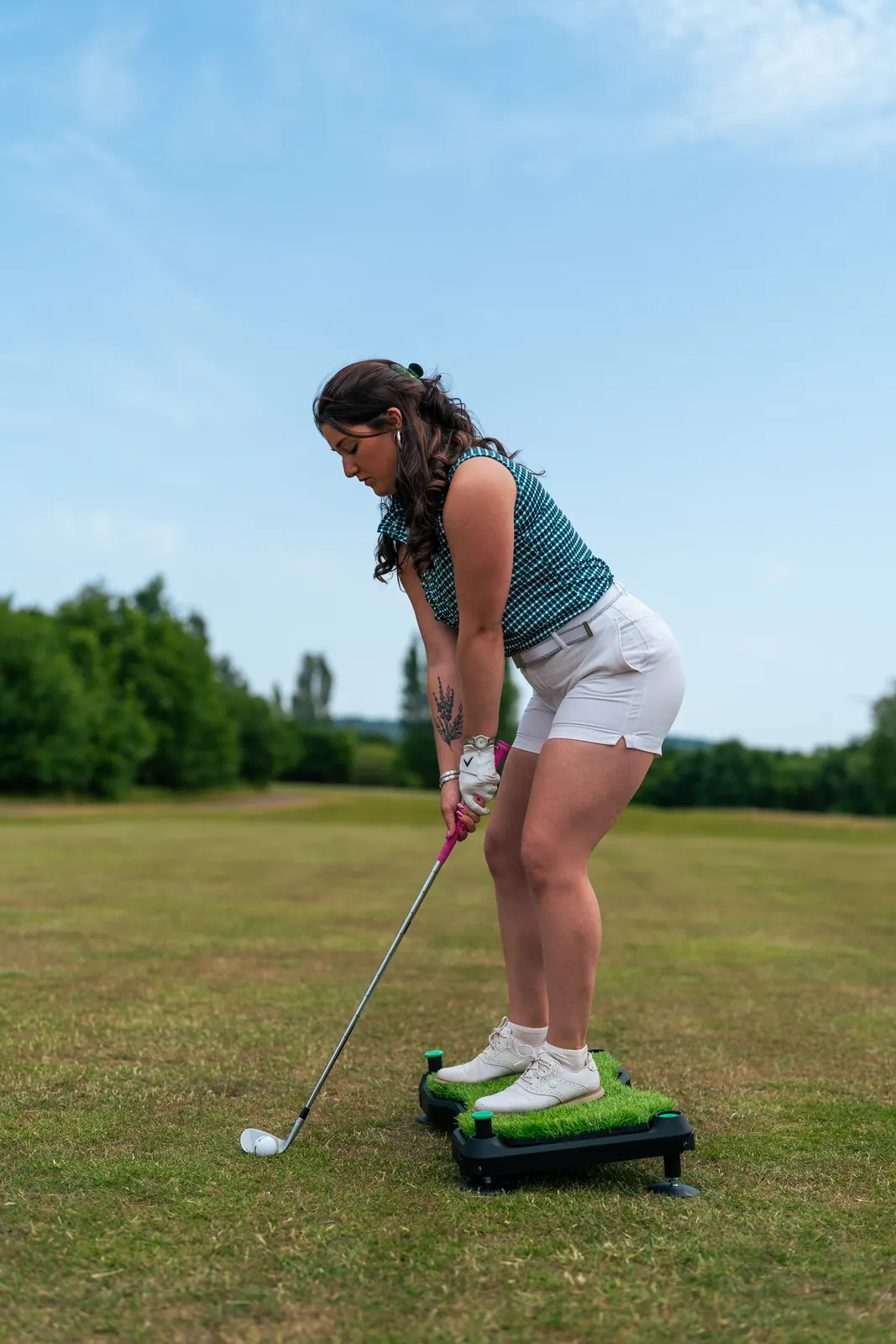
That second part is hard to find on a flat range. Libro is a portable platform that tilts up to 7 degrees along its length and 13 degrees across, so you can practise uphill, downhill and sidehill lies wherever you hit balls. The laser-engraved height lines let you set the same lie again and count your reps on it.