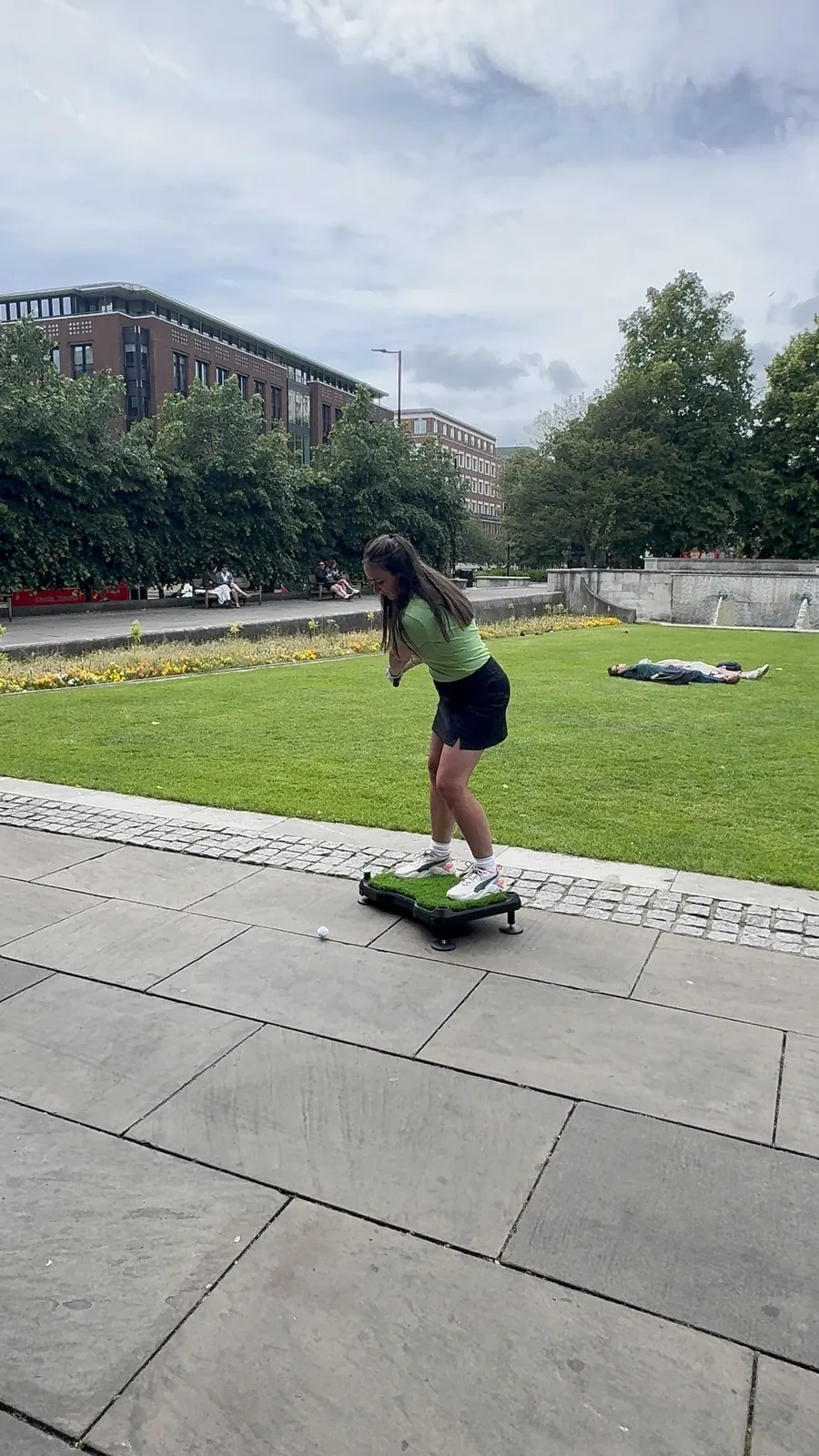
A downhill lie with the ball below your feet is a double right, and a low one. For a right-hander both slopes push the ball the same way, so expect a push or a fade that curves more than either slope would give you on its own, coming out lower and running further. Get down to the ball with plenty of knee flex, tilt your shoulders down the slope, play the ball back, aim well left and make a short, balanced swing.
Is it the hardest lie in golf? For most club golfers it is a strong candidate. Many golfers would put it top of the list, though a steep downhill bunker shot has a fair claim too. Whatever the ranking, it is the combination of fairway slopes that costs the most shots, because almost everything about it works against you.
Why it is so awkward
Take each slope on its own first.
A downslope takes loft off the club, so the ball flies lower and runs. The ground behind the ball is higher than in front, which makes thin and fat shots easy, and the ball tends to go right. The detail is in how to hit off a downhill lie.
Ball below your feet tips the toe of the club down, which points the face right, and it makes your swing upright and restricted. Again, the ball tends to go right, and standing up out of the shot is the classic miss. More in ball below your feet.
Here both slopes push right, so the effects add together. And both pull your weight in the same awkward direction: forward, down the hill, and towards the ball. That is the real reason this lie feels so unstable. Gravity is trying to tip you onto your front toes for the whole swing.
There is one small mercy. The downslope takes loft off, and less loft means the toe-down tilt points the face a little less to the right. It does not cancel anything, but it is one reason the ball does not go quite as far right as you might fear with a mid-iron.
The setup
Do the adjustment for each slope, then make balance the priority.
For the downslope, tilt your shoulders so the lead shoulder is lower and the line across your shoulders follows the ground. Play the ball further back than normal, towards your back foot.
For the ball below your feet, flex your knees more, bend further from the hips and hold the club at full length.
Then deal with the balance problem. Widen your stance, which lowers you and gives you a better base. Set your weight a little more towards your heels than feels natural, because gravity will spend the whole swing pulling you the other way. Your weight will still be on your front foot because of the downslope. The idea is to be forward and back towards the heels at the same time, which sounds odd but feels quite solid once you try it.
Take a practice swing on the same slope. If you finish stumbling towards the ball or down the hill, the real swing needs to be smaller. The post on balance on uneven lies has more on finding a swing size you can control.
Picking the club
There are effects pulling distance both ways here.
The downslope takes loft off, so the ball flies lower and runs further. That would suggest less club. But the ball-below-feet setup and a restricted swing take some distance away, which would suggest more. On a lot of these lies the two roughly balance out, so a decent starting point is the club for the yardage, with an eye on how much the ball will run once it lands.
Then ask if you need height. If there is a bunker or water to carry, a low runner is no use. You may need more loft, or you may need a different plan.
Avoid long clubs here unless the slope is very gentle. A 3-wood or long iron off a downslope is already a low, difficult shot. With the ball below your feet as well, it is very easy to hit it thin and well right. A mid-iron, or even a short iron to a flat spot, is usually the better choice. It is often worth reading lay up to a flat lie before you pull the long club.

Where to aim
Left. Further left than for either slope on its own.
The exact amount depends on the slope and the club, and you should expect a wedge to need more aim than a 7-iron because of the extra loft. A good habit is to pick a target well left that would still be acceptable if the ball went straight. Then if the slope does its job, the ball curves back towards the middle.
Make sure the clubface points at your starting line and your feet and shoulders are parallel to it. An open face at address on this lie turns a fade into a slice.
The swing
Short and calm. A three-quarter swing is plenty for most golfers, and on a steep slope a half swing can be the right call.
Stay down. Keep your knee flex all the way through. The two slopes are both tempting you to stand up, and standing up is what produces the thin.
Chase down the slope. After impact, let the club follow the ground downhill and keep it low. Your finish will be short and on your front side.
Swing more with the arms than the legs. Keep the lower body quiet so you do not lose your base.

Common misses
The thin or topped shot is the most common, almost always from standing up or the ball being too far forward. The slice right is the next, often because the face was open at address or the aim was not far enough left. The shank turns up too, from falling towards the ball through the swing.
Big pulls left are rare, but they happen when golfers try to stop the slice by swinging hard across it.
Thinking about the next shot
On a lie this difficult, a decent result is a ball in play with a straightforward next shot. Pick a target that leaves you a comfortable chip or a full wedge from a flat lie. Trying to hit a career shot from here is how a bogey becomes a triple.
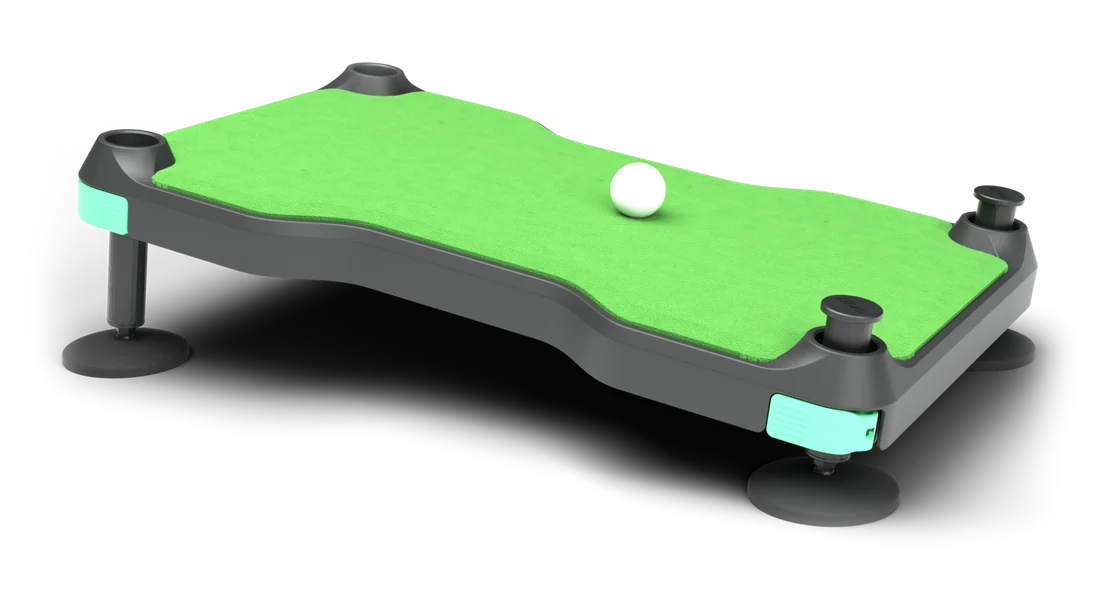
Few golfers ever get to practise this exact combination, so it stays frightening. Libro is a portable platform that tilts up to 7 degrees along its length and 13 degrees across, which means you can rehearse a downslope and a ball-below-feet lie at home and hit shot after shot until the setup feels normal. It works with any launch monitor or on its own, and you can reserve one for £10, fully refundable.